
£10 Minimum Deposit Casinos in the UK: What It Means
 Available in GB
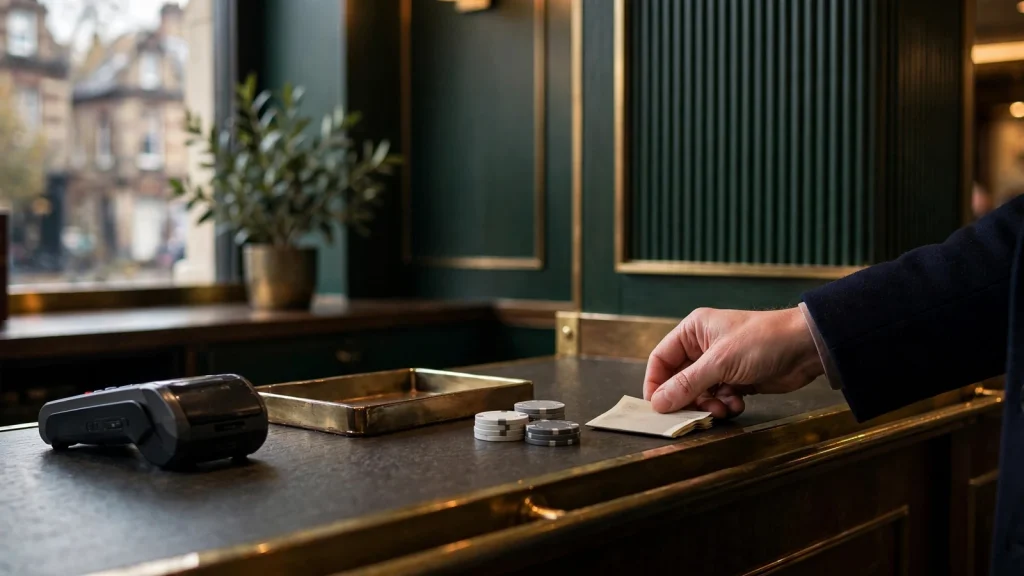
A cashier minimum sets the starting deposit, but payment options, bonus conditions and withdrawal rules can change its practical value.
What a £10 minimum actually tells you
A £10 cashier minimum is a point of entry, not proof that a casino is especially cheap—or that it accepts the smallest deposits available in the UK. I used to see “low minimum” and assume I’d found the gentlest way to try a site. That was an easy assumption to make, and not a very useful one. The number tells you what the operator asks you to put in at the outset; it does not tell you where that figure sits among the other options.
Some UK casinos accept deposits from £1. A specialist review recorded six UK Gambling Commission-licensed casinos with a genuine £1 minimum at the time of its check. That is a useful reminder that the lowest tier exists, but not a promise that you will find it everywhere or that an operator’s terms have stayed the same. The figure to trust is the one shown in the cashier and the relevant account terms when you check.
Between that lower entry point and a £10 minimum, there are casinos with different thresholds. A £10 requirement can feel ordinary because it is a familiar amount, but it is not the baseline for every operator. Nor does the presence of a smaller minimum automatically make that casino a better fit. If you planned to deposit £10 anyway, a lower threshold may not change your decision. If you wanted to start with less, it matters a lot.
Casino Features: Deposits, Payouts and Access
Direct banking illustrates why it helps to think in tiers rather than treat one number as universal. A specialist review of UK casinos described £10 as the typical minimum among operators accepting direct banking, while also identifying operators at £5 and £20. That is a snapshot from a particular review, not a rule for every cashier or a permanent market standard. It does show why two sites can both be legitimate choices and still ask for different opening amounts.
I have made the mistake of comparing casinos by the headline minimum alone. It feels like a clean shortcut: smaller number, smaller commitment. But a minimum is only one term. A £5 threshold might be more than you wanted to put in; a £20 one might be more than you intended to spend. And £10 can be either a sensible boundary or simply the amount an operator has chosen. The number does not decide that for you.
£5 Minimum Deposit Casinos in the UK: What to Know
It is also worth separating a low entry tier from a recommendation. A casino’s minimum does not tell you whether the site is suitable, how you will feel about using it, or whether you should deposit at all. In Great Britain, real-money online casinos serving customers must hold the relevant UK Gambling Commission licence. That is a basic legal condition, not a badge that turns a deposit into a good decision. I would check the licence and the terms rather than let a small figure do all the reassuring.
Before making any first deposit, set a financial limit you can stick to. I know that sounds less exciting than comparing entry amounts, but it is more useful. Choose the amount as a spending decision, not because a cashier sets a threshold or a promotional message makes a deposit sound urgent. If the minimum is higher than your limit, walking away is a perfectly good outcome.
So, what does a £10 minimum actually tell you? That the operator has set its opening threshold at ten pounds for the option you are viewing. It does not establish that £10 is the lowest available, the standard across every UK casino, or an amount you need to spend. Some sites accept £1; some direct-banking operators have been reported with £5 or £20 thresholds. Treat those as different entry tiers, then judge the amount against your own limit.
No magic number.
Making a £10 deposit online: the method can matter
A £10 minimum is not always a single rule applied identically to every button in the cashier. At a given UK operator, the minimum is generally shared across payment methods, but some casinos set a higher threshold for bank transfers than for cards or e-wallets. So if the cashier rejects your chosen amount, it may be the route you selected rather than the account’s overall minimum.
Attention: Some casinos set higher minimum deposit thresholds for bank transfers than for cards or e-wallets. Always check the specific limit for your chosen method in the cashier.
I used to treat the first figure shown on a payment page as the answer. It isn’t always. Open the cashier, choose the method you actually intend to use, and read the minimum shown for that option before entering your details. If the page shows a different threshold after you switch methods, trust the method-specific information. A £10 deposit can be possible by card while the bank-transfer route asks for more.
That distinction matters on a phone, too. A mobile casino may use the same account and cashier as its desktop version, but the available payment choices and their displayed limits are what count when you are making the deposit. Don’t assume that a method visible on one screen will remain available after you sign in or select a different route. Check the final cashier screen, not just a promotional banner or a general payment logo.
Debit card, e-wallet or bank account?
For a UK gambling deposit, the source of the funds matters. The credit-card gambling ban introduced in 2020 means you cannot fund casino play with a credit card. A debit card is different: Visa and Mastercard debit cards are accepted at almost all UK casinos and can support low deposits. Check that the card you select is a debit card, not a credit card, and use it only if the casino’s cashier lists it as an available option.
£2 Minimum Deposit Casinos in the UK: What to Check
An e-wallet can be another route, but it must be funded with debit rather than credit for gambling use. The name of the wallet alone does not tell you where its balance came from. If you have topped it up using a credit card, do not use that balance for a casino deposit. Follow the wallet’s funding history and the operator’s payment instructions; if you are unsure how the balance was funded, choose a clearly compliant source instead.
Direct banking sends the payment from your bank account through the option provided by the operator. It can be useful if you prefer not to enter card details, but the cashier may set a higher minimum for that route. That is the practical difference to watch for: the account can accept a particular amount by card or e-wallet while requiring a larger amount for direct banking. The payment screen should make the applicable minimum clear before you confirm.
No route makes a deposit risk-free or removes the need to check your own spending. Before your first deposit, set a financial limit in the account controls and choose a figure you can afford to lose. If the operator asks you to do this before proceeding, complete that step rather than treating it as a box to click through. I have been too casual about what I was authorising; slowing down at this point is a better habit.
Check before you confirm
A sensible payment check is short: confirm the cashier minimum for the selected method, make sure the card or wallet is debit-funded, and review the amount on the final confirmation screen. If a bank-account route has a higher entry point than the card option, you can compare the displayed choices without assuming that every method has to accept the same sum.
Do
- Confirm the cashier minimum for the selected method
- Ensure the card or wallet is debit-funded
- Review the final amount on the confirmation screen
Don’t
- Use credit cards or credit-funded e-wallets
- Try different funding sources at random after a failure
- Bypass rules due to a failed payment attempt
The same care applies when a payment does not go through. Don’t keep trying different funding sources at random, especially if that could mean switching from a debit-funded route to credit-funded money. Return to the cashier instructions or contact the operator through its stated support channel. A failed attempt is frustrating; it is not a reason to bypass the rules.
There is no need to use every payment option offered. Choose one whose funding source you understand and whose displayed minimum fits the amount you intended to deposit. If you would rather use a bank account, check its separate threshold first. If you would rather use a card, verify that it is debit. If you use an e-wallet, make sure the balance was funded from debit. Simple checks, but worth doing.
A payment logo is not permission to use any source behind it. The legal route is debit card, an e-wallet funded by debit, or a bank account—not a credit card, including credit routed through a wallet. Once you know which route you are using, the cashier’s own instructions are the useful guide to whether your £10 payment will be accepted. No guesswork needed.
“Best” and “new” are not the same as a better deal
If you’re looking for a casino with a £10 minimum deposit, check the terms carefully before choosing. This list also gives you the available payout-time information to consider.
1. Zombillion
Payout speed: 1-3 business days You can expect payouts to take 1–3 business days.
2. NightLuck
Payout speed: 1-3 business days Payouts are listed as taking 1–3 business days, which gives you a timeframe to factor into your choice.
3. Chanze
Payout speed: 1-3 business days You can use the stated payout time of 1–3 business days when considering this option.
4. WinBeast
Payout speed: 1-3 business days The available payout-time information gives you an estimate of 1–3 business days.
5. Amunbet
Payout speed: 1-3 business days Payouts are listed at 1–3 business days, a useful detail for you to consider.
6. BeOnBet
Payout speed: 1-3 business days You can expect a stated payout timeframe of 1–3 business days.
7. EvoSpin
Payout speed: 1-3 business days The listed payout time is 1–3 business days, which may help you weigh this option.
8. Dieselwin
Payout speed: 1-3 business days You have a stated payout timeframe of 1–3 business days to take into account.
9. NightWin
Payout speed: 1-3 business days Payouts are listed as taking 1–3 business days, giving you a timeframe to consider.
10. Revery Play
Payout speed: 1-3 business days You can factor in the stated payout time of 1–3 business days.
A “best” label sounds like a verdict. Often, it is only useful once you know what the reviewer means by it. One person may care most about a £10 cashier minimum; another may want a clear set of terms or a particular kind of game. If a page ranks casinos without explaining its criteria, the order tells you very little about whether any option suits you.
I’ve learned not to treat a low entry point as proof of value. The minimum tells you what the cashier will accept, not whether there is a welcome offer, whether you want to use the site, or whether its conditions make sense for you. Those are separate checks. A tidy headline can blur them together.
There is a straightforward example of why that matters. A specialist casino review reports that Zodiac, Luxury Casino and UK Casino Club each set a £10 minimum for UK accounts, while offering no sign-up bonus. That is a useful reminder, not a permanent promise about their current terms: offers and cashier rules can change, so check the operator’s own wording before opening an account. The key point is that meeting the minimum does not mean a bonus comes with it.
The reverse can also catch you out. A specialist review describes casinos that accept a £5 deposit at the cashier but set £10 as the qualifying amount for a particular bonus. So there are two different questions: what is the smallest amount you can deposit, and what amount, if any, activates the promotion you are considering? Don’t assume one answer settles the other.
“New” is another word I’d keep at arm’s length. A recent launch may be worth investigating, but being new does not establish that the site is better, that the advertised offer is available to you, or that the terms are especially generous. Nor does a fresh-looking page tell you how the account will work once you register. A launch date is not a recommendation.
When I compare a £10 minimum deposit casino, I look past the adjective and read the actual conditions. Is there a sign-up offer at all? Does the offer require a particular qualifying deposit? Are there restrictions attached to claiming it? If there is no bonus, is the casino still appealing on its own merits? Those checks are less exciting than a “top pick” badge. They are also more useful.
Meeting a casino’s minimum deposit requirement does not automatically guarantee that a welcome bonus is included or activated.
Be wary of pages that put “no deposit bonus” beside a £10 minimum without making clear what the phrase means. A casino may have a £10 cashier minimum and no sign-up bonus, as the reported examples show. A claim about a bonus should be checked against the offer’s own terms, not inferred from the deposit figure or from a page headline. “Best” does not fill in the missing detail.
I wouldn’t build a shortlist around a ranking alone. Use the £10 figure as a filter if that is your budget, then judge each option by the things you actually care about and confirm the current terms before depositing. If a page cannot explain why one casino is supposedly better, treat its badge as decoration.
Not a recommendation.
Not on GamStop? Check what that claim really means
“Not on GamStop” can sound like a simple feature alongside a £10 cashier minimum. It is not a safety check. The phrase alone does not tell you whether an operator is licensed to offer gambling to people in Great Britain, whether its safeguards meet UK requirements, or whether it is appropriate for you.
For real-money online gambling in Great Britain, the operator must hold a current UK Gambling Commission licence. That applies whether the business is based in the UK or elsewhere. A site using “not on GamStop” in its wording does not become a lawful UK casino by saying so; check the operator against the Commission’s register before you consider depositing. I would not treat a polished page, familiar branding or a low entry amount as a substitute.
£3 Minimum Deposit Casinos in the UK: What to Know
There is a personal side to this, too. If you have self-excluded through GamStop, looking for a way around that choice is a warning sign, not a clever workaround. I have talked myself into “just checking” things I had already decided to avoid. It rarely stayed just checking. Step away from the offer rather than trying to find a site that will let you play.
Age matters before money does. UK players must be at least 18, and operators must verify a customer’s age before allowing a deposit. If a site invites you to pay first and sort verification later, do not brush that off as a small bit of friction. A £10 minimum does not reduce the operator’s responsibility or make the account suitable for you.
Some pages also combine this label with wording about paying by SMS. That describes a payment claim, not proof of a UK licence or a safeguard. Before depositing, make sure the operator is licensed for the British market and that the funding route is compliant: debit card, an e-wallet funded by debit, or a bank account. Do not let a payment headline distract you from who is taking the money and under which regulatory system.
I know “available to UK players” can be made to sound reassuring. It is not the same as being regulated for UK customers. Offshore operators sit outside the UK Gambling Commission’s system; the relevant question is whether the operator serving you has the required UK licence. If that is unclear, don’t deposit while you try to untangle it.
Credit Card Ban
UK rules strictly prohibit funding casino deposits with credit cards, including credit routed through an e-wallet.
And set a financial limit before your first deposit. That is not a box-ticking ritual; it gives you a boundary before the balance starts to feel like something you need to chase. The label can wait. Your safety comes first.
What a tenner gets you on slots
A £10 balance does not have to go on one spin. On many slots, you can choose a stake of £0.10 to £0.20 per spin, then let the balance run down in small steps. That is the useful distinction: the cashier minimum tells you what you must put in, while the stake you select controls how much each spin costs.
I used to think a small deposit meant I had to make every spin count, so I raised the stake and watched the balance shrink faster than I expected. That was my mistake. A lower stake gives you more individual spins from the same balance, but it does not turn the money into a safer bet or guarantee a longer session. A losing run can still use it up.
Before you deposit, set a financial limit you are comfortable with. Then, in the game, check the stake shown before spinning. Slot controls differ: the amount can change when you select a different coin value, number of lines or stake setting. Do not assume the button you used last time leaves the game at the same cost. A quick look saves an unpleasant surprise.
£4 Minimum Deposit Casinos in the UK: What to Check
The stake is only one part of the pace. Online slots in Britain do not have autoplay, and each spin must last at least 2.5 seconds. So you cannot use an autoplay setting to fire through the balance unattended. That does not stop you clicking repeatedly, of course; a small stake can still add up if you play without noticing how long you have been going.
There is also a legal stake cap for online slots: £5 per game cycle for adults aged 25 and over, and £2 for players aged 18 to 24. Those are ceilings, not targets. If you are playing from a £10 balance, the small stake options available on many games may fit your plan better than going anywhere near a cap.
A £10 minimum deposit slot site can therefore offer a choice between quite different session styles. Look at the stake menu, not just the game artwork or the balance displayed in the corner. If the lowest available stake feels too high for the limit you set, close that game and choose another. No need to chase it.
The bonus maths behind a £10 deposit
A £10 cashier minimum tells you what you can pay in. It does not, by itself, tell you whether that payment unlocks a welcome offer. I used to treat those as the same figure and only noticed the difference after reading the promotion terms. Annoying, but avoidable.
The key phrase is minimum qualifying deposit. A specialist review reported that some bonuses set this at £10 even where the casino accepts deposits of £5. Another specialist review reported that some casinos exclude their lowest deposit bracket from welcome promotions. Those are examples of terms to check, not a rule that applies to every UK casino. The cashier can accept your money while the promotion stays inactive.
What is a minimum qualifying deposit?
A minimum qualifying deposit is the smallest amount required to activate a specific welcome offer, which may be higher than the casino’s general minimum deposit threshold.
Before opting in, look for the amount that qualifies, whether you must actively claim the offer, and which games count towards its conditions. Check that the terms apply to the offer you actually want, rather than assuming every promotion on the site works the same way. A £10 minimum deposit casino bonus in the UK is only useful to you if your deposit meets the offer’s own entry conditions. Read the small print first.
The date matters with wagering, too. Since 19 January 2026, the UK Gambling Commission has capped wagering requirements for gambling incentives at 10 times the bonus funds. That gives you a ceiling to compare against; it does not mean every bonus has the same requirement or that the bonus is automatically good value. Work out what the terms ask you to wager, and remember that the figure applies to the bonus funds, not as a description of your deposit.
A “no deposit bonus” is a different proposition: the name means the offer is not meant to depend on making a qualifying deposit. If a promotion also asks for a deposit, check its actual conditions rather than relying on the label. Even when no deposit is required, read the wagering and game restrictions before treating any winnings as cash you can freely withdraw.
Your payment method does not rewrite the bonus terms. Direct banking deposits qualify for welcome bonuses at UK-licensed casinos on the same basis as card or e-wallet deposits, and the terms are identical across those methods. The cashier decides whether a payment can be made; the promotion rules decide whether it qualifies. Two separate checks.
No-Minimum-Deposit Casinos in the UK: What to Check
My quick habit now: check the cashier minimum, then the qualifying deposit, then the wagering terms. If those do not line up with what I planned to spend, I leave the offer alone. No bonus is worth guessing.
How a £10-deposit casino account works in practice
Once you have chosen a casino with a £10 minimum deposit, the cashier is only the start of the process. You create an account, provide the requested details and complete the operator’s checks. A UK-licensed casino must verify your age before allowing you to deposit, so you may need to wait for that step to be completed. Don’t treat a successful sign-up as proof that everything is ready.
Before your first deposit, the operator must also prompt you to set a financial limit. I used to rush past account screens because I wanted to get to the games; that is exactly when I was least likely to think about what I could afford to lose. Set a limit you can live with before paying in, and check where to change it later.
When the deposit reaches your account, the balance is available for gambling subject to the casino’s rules and any checks it requires. Keep an eye on the account balance rather than assuming the original tenner is still intact after playing. Depositing is not the same as withdrawing: a small remaining balance may be below the casino’s cash-out threshold.
Attention: Your balance must reach the casino’s minimum withdrawal threshold—which can range from £1 to £20—before you can request a payout.
That threshold varies by operator. One specialist review reports minimum withdrawals of £10 to £20 at many UK casinos, while another account of the market gives a range of £1 to £5. Those are reported figures, not a promise about the casino you are using. Check the cashier or withdrawal terms for the specific account before you deposit. If the minimum is higher than your balance, you may have to keep playing before you can request a payout. Not ideal.
When you do request a withdrawal, the operator may need to complete account checks before releasing funds. Make sure your personal and payment details are accurate, and read the withdrawal instructions rather than assuming the deposit process tells you how cash-outs work. A pending request is not money in your bank account yet.
My practical routine is simple: verify the account, set a limit, read the withdrawal rules, then fund it. If the terms are hard to find, I pause instead of depositing and hoping the details will sort themselves out later. A £10 balance can feel straightforward; getting it back out depends on the account rules as well as the amount left.
Trust the licence, not the word “trusted”
A site can call itself “trusted” as often as it likes. That word is marketing; it does not tell you who regulates the operator or what protections apply when you open an account. For a casino serving the UK, I start with the operator’s current UK Gambling Commission licence. Remote operators offering gambling to customers in Great Britain must hold the relevant licence, wherever the company is based.
That check matters more than a polished page promising a safe £10 deposit. A licence does not make gambling risk-free, and it is not a reason to skip the terms. But it gives you a regulator to identify and a framework of requirements behind the site. If the operator’s licensing information is unclear, I would not treat a reassuring badge or the word “safe” as a substitute.
Online casinos with no sister sites in the UK
There are practical safeguards to look for before money goes in. You must be at least 18 to gamble online in the UK, and the operator must verify your age before allowing a deposit. A new customer must also be prompted to set a financial limit before the first deposit, with account-level controls available afterwards. I used to rush past that screen because I wanted to get started. Not a clever move.
The payment route is part of the basic safety check, too. UK rules prohibit credit-card gambling deposits. Funds should come from a debit card, an e-wallet funded by debit, or a bank account; a wallet that lets credit-card funds be used for gambling is not an acceptable workaround. That is not a detail to wave away because the cashier accepts a tenner.
If something goes wrong, a UKGC licensee must provide an internal complaints process and access to an approved Alternative Dispute Resolution service. Keep that in mind before signing up: you want to know where a complaint can go, not just where the deposit button sits.
A £10 cashier minimum says what the site will accept at the point of funding. It says nothing by itself about whether the operator is licensed or whether its safeguards are in place. Check those separately, then decide whether you still want to proceed.
A £10 deposit is not the same as £10 you can withdraw
A £10 deposit gets money into your casino account; it does not mean you can cash out that same amount whenever you choose. The cashier’s withdrawal rules are a separate part of the deal, and they can make a small balance awkward to access.
A specialist casino review reports minimum withdrawal thresholds of £10 to £20 at many UK casinos. That is a reported range, not a rule for every operator, so check the cashier or the withdrawal terms before you deposit. If a site’s threshold is higher than your balance, you may not be able to request a payout yet.
There’s another catch I learned the hard way: the amount you deposited and the amount available to withdraw are not necessarily the same. Once you play, your balance can go up or down. If it falls below the stated withdrawal minimum, you may need to keep playing before you can request a cash-out. That is not a reason to chase the difference. It is a reason to understand the threshold before you start.
Look for the minimum withdrawal amount, any limits on how much can be withdrawn, and the conditions attached to a payout. Read the wording for real-money balances, rather than assuming that a £10 minimum deposit casino will let you withdraw £10. A deposit minimum tells you what you can pay in; it says nothing by itself about the amount you can take out.
I now treat the withdrawal figure as part of the price of using an account. If you are putting in £10, compare that balance with the operator’s stated cash-out minimum and decide whether you are comfortable with the gap. If the terms are unclear, pause instead of finding out after you have deposited.
Small print matters. When your balance is low, a withdrawal threshold can matter more than the headline cashier minimum.
PayPal and other e-wallets: check the cashier minimum first
PayPal can be a useful way to fund a casino account, but seeing its logo on a site does not tell you whether it will accept a £10 deposit. Availability and the cashier minimum depend on the operator and the payment option shown in your account. I’ve learnt not to assume that the amount accepted by one route will work through another. Check the cashier before you confirm anything.
That matters if you’re specifically looking for a UK casino where PayPal and a ten-pound deposit work together. Look for the minimum displayed beside PayPal itself, not just a general minimum-deposit claim elsewhere on the site. If the cashier sets a higher threshold, you may need to choose another compliant option or leave without making the deposit. No need to force it.
E-wallets can also have their own charges. A specialist review reported flat transaction fees of £1 to £3 for some payment providers; that is not a fee to assume applies to every wallet or casino. Check the provider’s terms and the cashier’s information before paying. A fee can make a small deposit less useful, even when the amount goes through.
The payment route does not rewrite a promotion’s rules. At UK-licensed casinos, direct banking deposits can qualify for welcome offers on the same basis as card or e-wallet deposits, and the bonus conditions do not change simply because you picked one method over another. Wagering rules, game restrictions and any maximum withdrawal cap relate to the bonus amount, not to whether you paid by PayPal. Read the offer itself.
There is also a difference between an e-wallet being available and it being suitable for gambling payments. Use funds from a debit card or bank account, not credit-card funds; UK rules prohibit credit-card gambling deposits, including credit-card funding routed through a money service business. If a wallet lets credit-card funds be used for gambling, operators cannot accept those wallet payments.
Before your first deposit, set a financial limit you can stick to. Then check the cashier minimum, any fee and the offer terms, if you intend to claim one. Three quick checks.
What is the lowest deposit available at UKGC-licensed casinos?
The lowest available tier is £1, although it is rare and may be limited to specific payment methods. Check the cashier for the minimum on the method you plan to use.
Can I take out winnings from a £1 deposit?
Yes, provided your balance meets the casino’s withdrawal minimum. Minimum withdrawals commonly range from £1 to £5.
What is the maximum wagering requirement in Great Britain?
Since 19 January 2026, gambling incentives cannot require more than 10x wagering of bonus funds.
Which payment method is best for low-deposit casino players?
A debit card is a practical choice: Visa and Mastercard debit cards are accepted at almost all UK casinos and support low deposits. Some e-wallets also support £1 transactions, but their balance must be funded with a debit card rather than credit.
What is the minimum deposit at UK casinos accepting direct banking?
The typical minimum is £10, though some operators set it at £5 or £20. Check the direct-banking option in the cashier, as its minimum can differ from those for cards or e-wallets.
Casino Features

£1 Minimum Deposit Casinos in the UK: What to Know
A £1 deposit can fund play, but bonus access and withdrawal eligibility may follow separate...

£2 Minimum Deposit Casinos in the UK: What to Check
A low cashier minimum is only one part of the deal; payment rules, bonus terms...
£20 Minimum Deposit Casinos in the UK: What to Check
A practical look at deposit thresholds, bonus wagering rules, payment methods and cash-outs before choosing...

£3 Minimum Deposit Casinos in the UK: What to Know
A practical look at cashier minimums, bonus conditions, payment options and keeping small-stakes play in...

£4 Minimum Deposit Casinos in the UK: What to Check
The cashier’s minimum can differ from the amount you choose to deposit, and payment options...

£5 Minimum Deposit Casinos in the UK: What to Know
A £5 deposit is an entry point, while payment methods, promotions and account terms determine...

Best Casino App UK: What to Check on Mobile
A practical look at app and browser play, bonus terms, mobile game controls, live tables...

Instant Withdrawal Casinos UK: What “Fast” Means
A fast label does not guarantee immediate access; payout timing can depend on processing, payment...

Mobile Casino Phone Credit Deposits in the UK
Contract deposits appear on a mobile bill, while pay-as-you-go deposits use existing credit; fees and...

Casinos Not on GamStop: Instant Withdrawals Explained
Withdrawal speed depends on more than the casino: payment routes, bonus wagering and verification can...

Casino No ID Verification in the UK: What It Means
The guide distinguishes delayed checks from no checks and explains how verification can affect play,...
Fast withdrawal casinos in the UK: what to check
A practical guide to the time between a confirmed request and funds reaching your account,...

Jackpot Mobile Casinos in the UK: Slot Types and Rules
Jackpot labels can describe prize structure, triggers or pool reach, so the game’s own rules...

No account casino UK: rules, payments and bonus terms
A no-account label changes the entry process, not the licensing rules or checks attached to...

No-ID Verification Withdrawals at UK Casinos
A low-friction sign-up does not guarantee a withdrawal without checks, especially where UK licensing rules...

No-Minimum-Deposit Casinos in the UK: What to Check
Small deposits can come with limits on payment routes, spins, bonuses and withdrawals that affect...

Online Casino No Registration UK: What It Means
Quick sign-up, free-play modes and real-money gambling are different experiences, and identity checks still apply...

Online casinos with no sister sites in the UK
A shared parent company or technology can explain similarities between casinos, but the sister-site label...

Quick Withdrawal Casinos in the UK: What to Check
Withdrawal speed depends on cashier processing, the payment route and any unfinished bonus wagering. Why...

Same-Day Payout Casinos in the UK: What to Expect
A withdrawal depends on both casino approval and the payment route, so an advertised estimate...

High-Paying Online Casinos in the UK: RTP Explained
RTP is a theoretical long-run measure of game returns, not a guarantee of winnings or...