
Casinos That Accept Debit Cards in the UK
 Available in GB
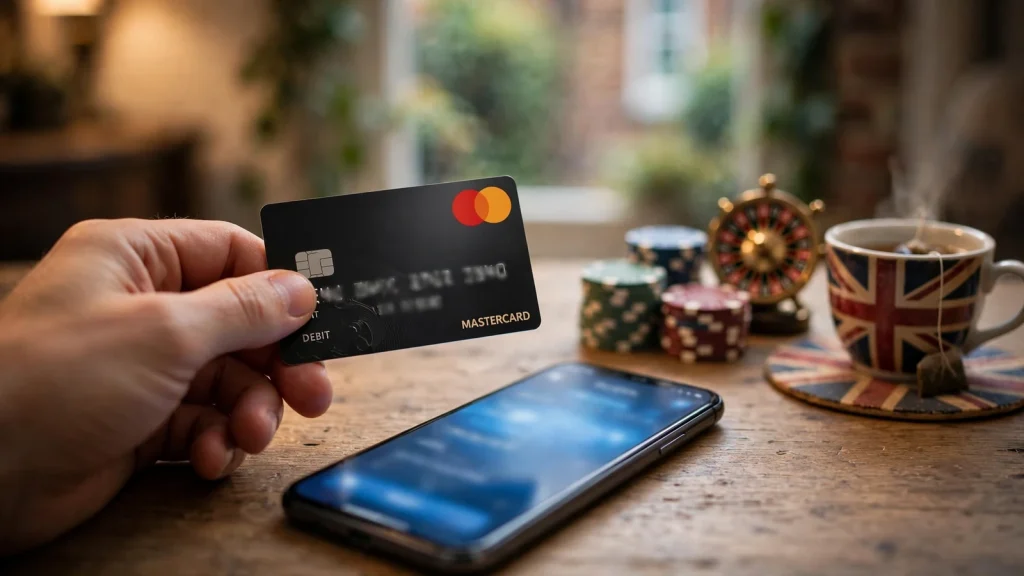
Debit-card acceptance is only one part of the decision; the cashier shows which options are available to an account.
Paying by debit card at an online casino
A debit card is a familiar way to fund an online casino account: the payment comes from money held in your bank account, rather than from a line of credit. UK casinos commonly accept debit cards, including Visa and Mastercard, though the options shown to you depend on the casino and your particular card. That makes the card a straightforward starting point, not a guarantee that every card will work everywhere.
I find it helps to think of the card as a payment route, not a stamp of approval for the casino itself. A logo on a payment page tells you something about the method the site says it supports; it does not tell you whether the site is suitable, whether its terms are clear, or whether the transaction details match what you intend to do. Those are separate checks.
Before entering card details, make sure you are on the casino’s genuine website or app and have signed in to your own account. Then look at the payment options presented there, rather than relying on a general claim elsewhere. Payment pages can change, and the cashier is where you can see what is actually available to your account. If the card brand you hold is not shown, do not assume a similar logo means it will be accepted.
When choosing a UK casino that accepts debit cards, payment details matter alongside the games on offer. Use these brief verdicts to check the payout information available for each option.
1. Zombillion
Payout speed: 1-3 business days Zombillion has a stated payout speed of 1–3 business days. Check its payment terms to see how this fits your needs.
2. NightLuck
Payout speed: 1-3 business days NightLuck lists payouts at 1–3 business days. Review the operator’s payment details before deciding whether it suits you.
3. Chanze
Payout speed: 1-3 business days Chanze’s stated payout speed is 1–3 business days. You can use this as one point to consider when reviewing its payment information.
4. WinBeast
Payout speed: 1-3 business days WinBeast lists a payout speed of 1–3 business days. Check its terms for further details relevant to your payment choice.
5. Amunbet
Payout speed: 1-3 business days Amunbet has a stated payout speed of 1–3 business days. Consider this alongside the payment terms you review before signing up.
6. BeOnBet
Payout speed: 1-3 business days BeOnBet lists payouts at 1–3 business days. Check its payment information to see whether the details meet your expectations.
7. EvoSpin
Payout speed: 1-3 business days EvoSpin’s stated payout speed is 1–3 business days. Review the operator’s payment terms for information beyond this timeframe.
8. Dieselwin
Payout speed: 1-3 business days Dieselwin lists a payout speed of 1–3 business days. You may want to check its payment details before making a choice.
9. NightWin
Payout speed: 1-3 business days NightWin has a stated payout speed of 1–3 business days. Consider this information as part of your review of its payment terms.
10. Revery Play
Payout speed: 1-3 business days Revery Play lists payouts at 1–3 business days. Check its payment information for any other details that matter to you.
It is also worth slowing down at the point where you choose the card. Check the card brand and the account details you are entering, and make sure the account is yours. A typo or a card selected from an old saved-payment list can turn a simple task into an avoidable query with the operator or your bank. I have learned not to rush through payment screens just because they look familiar. Familiar is not the same as checked.
A debit-card payment is initiated through the casino’s cashier, but your bank or card issuer is part of the process too. If a payment is declined, that does not automatically tell you which side stopped it. The casino may not be able to give a detailed explanation, and your bank may have its own information about the attempted transaction. Rather than repeatedly submitting the same payment, check the message on screen and contact the relevant provider if you need clarification.
Keep an eye on what the cashier says before you confirm. Read the amount and currency displayed, and make sure the payment is being made from the account you intended to use. A page can be easy to skim when you already know how card payments work; that is exactly when a small detail can slip past. If something looks different from what you expected, pause instead of treating the confirmation button as a formality.
A debit card can feel more direct than learning a separate payment service, because you already use it for ordinary purchases. But that convenience should not make you skip the account terms. Check the casino’s payment information and the rules attached to your account, including any conditions that apply to depositing or withdrawing. Payment methods do not all have identical terms, and the method that suits one person may not suit another.
The phrase “easy payment” can hide a lot. What I want to know is whether the method is clearly displayed, whether I understand what I am authorising, and whether I can find the relevant conditions before I commit. If those details are hard to locate, I do not treat the card logo as reassurance. A recognisable brand is only one small part of the decision.
Diners Club Casinos in the UK: Card Rules and Payments
There is no special kind of casino game created by paying with a debit card. The card is simply one way to move funds into an account; what you do after that is governed by the casino’s games and terms. Keeping that distinction in mind stops payment wording from sounding more meaningful than it is. “Card casino” is a label for a funding option, not a promise about the overall experience.
For a first payment, I would take a moment to check the site, the account, the payment option and the details on the confirmation screen. That is not a complicated ritual, just a way to catch an obvious mismatch before money leaves your account. If the information is clear and the card is offered in the cashier, you can make an informed choice about whether to use it. No need to hurry.
What makes a debit-card casino a better fit?
When I compare a debit-card casino, I don’t stop at the line that says “no fee”. It sounds reassuring, but it only answers one part of the cost question. The amount that leaves your bank account and the amount credited to your casino balance can be affected at different points in the payment chain.
A specialist payment review identifies several possible charges to consider: a fee from the casino, one from the payment provider, a charge from your bank or card issuer, currency-conversion costs, and network fees. Not every transaction has every charge, and the party responsible can differ. That is why I treat a fee claim as something to check against the actual payment details, not as a verdict on its own.
Look past the visible fee
A flat charge is easy to spot. A conversion spread is less obvious: it is the difference between an exchange rate used for the transaction and a reference rate you might compare it with. A specialist payment review notes that this spread can cost more than a visible flat fee. The point is not that it always will; it is that a payment can look free while still converting at a less favourable rate.
Currency matters even when you use a familiar card. If the casino balance and your bank account are in different currencies, conversion may enter the calculation. The displayed payment amount may not tell you the final cost by itself, particularly if your bank or card issuer applies its own rate or charges. I’d compare the currency shown for the casino account with the currency the card payment will use, then read any rate or fee information presented before confirming.
Casinos That Accept Wirecard in the UK: What to Check
That small check can change the comparison. A debit-card casino with a stated charge may cost less overall than one advertising a free deposit if the latter uses a more expensive conversion route. Equally, if the transaction stays in the same currency and no provider or bank charge applies, a visible fee may be the main cost to assess. It depends on the payment in front of you.
Compare like with like
A useful comparison starts with the same intended payment amount and the same currency. Look at what would leave your account, what the cashier says will be credited, and whether any fee or conversion is disclosed along the way. If one site displays an amount in pounds and another in a foreign currency, the headline figures are not directly comparable.
I used to read “free” as “nothing can be taken off the value”. That was too simple. The casino might not charge a deposit fee, while another part of the payment route still affects the total. The bank statement can also be more informative than a promotional label: check how the transaction is described and whether the amount matches what you expected. If it doesn’t, pause and find out which party set the charge or rate before making another payment.
This is not a reason to assume that every card payment has hidden costs. It is a reason to compare the complete route rather than one line of text. The relevant details can depend on the casino, provider, card issuer and currency used. A “best” label cannot settle those differences for your particular card.
What a better fit looks like
For me, a good fit is a debit-card option whose costs are understandable before I confirm the transaction. I want to be able to tell whether the casino charges a fee, whether another provider is involved, and whether currency conversion might alter the amount. If those details are unclear, a prominent zero-fee message does not answer enough.
Casinos That Accept Bitcoin in the UK: What to Check
The same approach works when comparing debit-card casino sites without turning the decision into a league table. One may suit a cardholder whose account and casino balance use the same currency; another may make the total easier to understand in a different situation. The useful comparison is the one based on your payment route, not an abstract claim that one site is best for everyone.
I’d also keep the calculation modest: compare the charges and conversion for the transaction you actually intend to make, rather than assuming that a payment method has one universal price. Provider fees, bank charges, exchange-rate spread and network costs can all affect the outcome, but their presence and amount are not identical in every case. No single fee label tells the whole story.
The practical test is simple: can you see what you are authorising, in a currency you understand, with the relevant charges made clear? If yes, you have something meaningful to compare. If not, don’t let “free” do the explaining.
Making a deposit without a nasty surprise
The amount you can put into a casino account is not just a choice between a small and a large figure on the payment screen. There may be a minimum for each deposit, a maximum for a single transaction and separate limits over a day or a month. Those ceilings can differ by payment method and account status, so I check the cashier and account settings before deciding what to send.
That sounds obvious. I have still tapped through a payment screen too quickly, assuming the amount I had in mind would go through. The cashier can reject a deposit that falls below its minimum or exceeds a method’s limit, and repeated attempts are a poor way to learn the rules. Check the displayed range first, then enter an amount that fits it.
Treat the minimum as a rule, not a suggestion
A specialist casino review describes minimum deposits in the £10–£20 range, with the figure depending on the payment method. Treat that as a guide to what you may encounter, not a promise that applies to every casino or every card. The cashier is the place to confirm the current minimum for your account and chosen method.
It is worth checking before you commit to a payment. If your planned deposit is below the stated minimum, raising it just to get through the screen may not be sensible. The deposit should fit your budget, not the other way round.
Casinos That Accept InstaDebit in the UK: What to Check
Look beyond one transaction
A maximum shown beside the card option may apply only to a single deposit. It does not tell you, by itself, whether there is also a daily or monthly cap. Nor does one account’s limit necessarily settle what another customer can deposit: account status can affect the available ceiling.
I look for the limits in both the cashier and the account controls, rather than relying on a figure remembered from a previous visit. If the screen is unclear, pause and check the operator’s help information before paying. A limit you cannot find is not a limit you should guess.
This matters when you are thinking about more than one deposit. Several transactions may each fit a per-payment maximum while still running into a wider account limit. Keep the separate caps in view, and do not assume that splitting an amount changes what you can afford or what the account permits.
Set your own boundary first
UKGC rules require remote gambling operators to prompt new customers to set a financial limit before their first deposit. They must also make account-level limit controls accessible. That gives you a chance to decide on a boundary before money is moving, rather than trying to work it out after a run of deposits.
I find it easier to choose a limit when I am not staring at a payment button. Set one that reflects what you can afford to lose, then check how the account lets you manage it. The control is useful only if you can find it and understand what it applies to.
A deposit limit is a guardrail, not a spending target. If the casino allows more than you planned to spend, that does not make the extra amount a good idea. Keep your personal budget separate from the platform’s maximum; the two answer different questions.
A quick check before you pay
Before making a deposit by debit card, take a moment to confirm:
- the minimum and maximum shown for that payment;
- whether separate daily or monthly limits apply;
- whether your account status changes the available ceiling;
- which financial limit you have set in the account controls.
If the cashier’s range and the limit settings seem to conflict, do not test the difference with a payment. Check the operator’s information first. A brief pause beats sorting out an unexpected rejection—or discovering you have deposited more than you meant to.
Why a debit card may not work at every UK casino
Seeing Visa or Mastercard mentioned on a casino’s payment page is a useful starting point, not a promise that every card carrying that logo will work. Acceptance can depend on the specific card product and on whether the payment option is available to you in the cashier. I’ve learned not to treat a logo on a review page as confirmation of a live payment route.
A specialist review lists Visa and Mastercard among the card options, but that information cannot settle whether a particular card is eligible now. Card availability can change, and a casino with debit card payments may still not accept your specific product. The practical check is the cashier: look for the card option there and read what it says about eligibility before trying to pay.
The word “card” can also hide an important distinction. A debit card draws on money in your bank account; a credit card borrows it. In the UK, credit-card gambling has been banned since 14 April 2020, and that rule has not been relaxed. UK-licensed casinos cannot accept credit-card payments for gambling. A credit card does not become an acceptable gambling payment just because it carries the same Visa or Mastercard logo as a debit card.
That is why it is worth checking what kind of card you are selecting, rather than relying on the brand printed on its front. If the cashier does not show your card as an available option, do not assume that another card with the same logo will be treated identically. Nor should you try to route credit-card funds through another payment service: the UK restriction also covers credit-card funding used for gambling through a money service business.
There is no contradiction in a casino advertising debit cards while declining a payment from you. The payment label may cover eligible debit products, not every card in circulation. The cashier is the point where the general claim meets your account and your actual payment option. If the option is absent or the transaction is refused, pause rather than repeatedly attempting the same payment.
Casinos That Accept iDEAL in the UK: What to Check
For me, that small check saves the familiar annoyance of reaching the final payment step and discovering that “accepted” had a narrower meaning than I assumed. It is not a reason to look for a workaround to the credit-card ban. It is a reason to distinguish debit from credit and confirm that the debit-card route is actually offered for your transaction.
Simple distinction.
Getting a casino withdrawal back to your debit card
A deposit and a withdrawal are different legs of the same payment, not mirror images. I used to assume that if a card payment reached my casino balance straight away, money coming back would move just as quickly. That assumption is an easy one to make—and a poor one to rely on.
UK anti-money laundering rules generally mean a casino must return payouts to the original payment source. So if you funded your account with a debit card, the casino may send the withdrawal back to that card rather than let you choose any destination you like. This is part of the checks around where gambling funds came from and where they go; it is not simply a preference for one payment button over another.
The process has two separate stages. First, the casino reviews and approves the withdrawal. It may need to check your account and complete KYC, particularly before processing a first withdrawal. A specialist review describes first payouts as potentially taking longer while verification is completed. If the casino has requested documents or your account details need checking, the payment method cannot make that approval step disappear.
Only after the casino releases the payment does the card route come into play. A specialist review notes that a card deposit can be instant while its payout takes several business days. The quick arrival of a deposit tells you little about how soon the withdrawal will show on your bank account: the casino’s review happens first, and the card payment then has to be processed.
That distinction matters when you see “fast withdrawal” in a payment description. It may refer to the route once a payout is approved, not the whole time from clicking withdraw to seeing the funds. A specialist review also places debit cards linked to fast payout systems among the quicker withdrawal options, alongside PayPal and open banking services. That is not a promise that every debit card withdrawal will be quick. The casino’s approval and your account’s verification status still affect the wait.
Casinos That Accept Upaycard in the UK
I now look for the wording that separates the stages: how long the casino takes to review a request, whether KYC is complete, and what the payment information says about the card payout after approval. If those details are vague, I do not treat a fast deposit as evidence of a fast withdrawal. Different steps. Different clocks.
Before requesting a payout, check the cashier’s withdrawal instructions and any account messages. If the casino asks for information to confirm your identity or payment, respond through its stated process; until its review is complete, the money may not have been released. Once it has been sent, the casino’s status and the bank’s account record may not update at the same moment, so check the payment details rather than assuming that “processed” means the funds are already visible.
A casino withdrawal to a debit card can be a practical route, but “fast” only makes sense when you know which part of the journey the claim describes. Approval first. Card processing after.
Keep the payment route simple
I used to think the important part was getting money into a casino account. I paid less attention to whether the account details and payment method clearly belonged to me. That can turn a straightforward transaction into an avoidable back-and-forth.
For a debit card casino, the simplest arrangement is usually an account in your own name and a payment route in that same name. Check that the details you give the casino match the details associated with your card. A small mismatch in personal information can raise questions that have nothing to do with how much you deposited or whether the card itself works.
Keep it consistent. If you deposit using a named card, avoid switching between other people’s accounts or payment routes without a good reason. The more clearly the casino can connect the transaction to you, the less likely basic ownership checks are to cause friction. It is not a guarantee that every payment will go through without review; it just avoids creating confusion yourself.
I learned that the awkward way: I treated payment methods as interchangeable and assumed the casino would sort out the details later. It is cleaner to pick one route you control and use it consistently for deposits and withdrawals where available. Keep your casino account details accurate, and do not use a card or account that belongs to someone else. Simple, but worth doing before money moves.
A consistent route also makes it easier to follow your own transactions. You can see which account you used, recognise the payment when it appears in your records, and avoid wondering whether a change of method is the reason something needs extra attention. That is a practical benefit, not a promise of faster processing.
If you need to change a card or account, update the casino details rather than trying several routes at random. Check the payment options shown for your account and use a method that is in your name. If anything is unclear, ask the casino before making another transaction. Guesswork rarely makes a payment trail clearer.
The tidy version is one named account, one payment route you control, and matching details throughout. That is often the cleanest way to handle a debit card casino UK account: fewer ownership questions, fewer loose ends. Not magic. Just less mess.
Looking beyond the word “top”
A “top” label is a shortcut, not a payment promise. A list of casinos that take debit cards can tell you which options are advertised, but it cannot tell you how your own bank, card and account currency will behave in a particular transaction. I’ve learned to treat rankings as a starting point, not a verdict.
For a debit-card deposit, the useful question is whether the cashier accepts your card and shows the amount in the currency you expect. A site can look ideal on a comparison page, yet the payment route may not suit your account. That is the bit a broad ranking cannot settle for you.
Nor does choosing a card mean it is automatically the quickest route for every stage. Open banking and bank transfers are described in some specialist reviews as capable of offering instant deposits and fast withdrawals at many sites. That is a possibility, not a guarantee for your transaction. Bank transfer delivery can depend on when it is sent, whether a cut-off time has passed, whether the day is a weekend, and whether currency conversion is involved.
Payment Methods for UK Casinos: Compare Options
Those details matter because “fast” can refer to one part of the journey and not another. A deposit may be credited quickly while a later transfer takes longer to arrive. If the casino account and bank account use different currencies, conversion can also affect the final amount. No ranking can remove those moving parts.
I would compare the payment route I can actually use, rather than chase the site with the boldest badge. Check the cashier’s available methods and currency, then read what the operator says about processing and delivery. If you are considering a bank transfer, include timing and conversion in that check; the method’s headline speed is only part of the story.
A ranking may still help you make a shortlist. Just don’t let “top” do the thinking. Your transaction is the test.
Using a debit card for casino slots
A debit card does not change what a slot is or how it works. It is a way to put money into your casino account; once the funds are there, you select and play games using the account balance. The card is not attached to a particular reel, feature or type of spin.
That distinction sounds obvious, but I used to blur it when looking for “slots with debit card” options. The phrase can make it seem as if a card unlocks a special set of games. It doesn’t. If a casino accepts debit cards, the payment method funds the account, while the games available to you are a separate matter.
So when people talk about debit card slots in the UK, they generally mean playing casino slots after funding an account by card. UK casinos commonly accept debit cards, including Visa and Mastercard, but that describes a payment route—not a promise that every game or every card product is available everywhere.
I find it clearer to think of the process in two parts: the card handles the deposit, then the casino account balance is what you use for play. Keeping those roles separate also helps avoid confusing a payment issue with a game issue. If a slot will not load or is unavailable, changing the card would not make it a different game; if a deposit does not go through, that does not tell you anything about the slot itself.
Plain distinction. Card in, balance out.
Check the cashier before you deposit
I used to treat a payment logo on a casino page as a promise that my own card would work. It isn’t. Before entering any details, I now open the cashier and check the options shown for my account. Visa and Mastercard may appear in a site’s payment information, but that does not confirm that every card product is eligible or currently available to UK customers.
A specialist review may list both networks, but the cashier is where I check what I can actually use. Look for the card option after signing in, and read any notes about supported cards or restrictions. If the method is missing, or the wording is unclear, ask the operator before trying a payment. Less guesswork.
Then check the account currency. A cashier displaying pounds sterling (GBP) is different from one that will process your payment in another currency. If the account is not set to GBP, your bank or payment provider may convert the amount, and the rate can affect what leaves your account. A review page that mentions GBP is a useful prompt, not a substitute for checking your own account settings.
I also pause on the final payment screen. Confirm the amount, currency and selected card method before authorising anything. If the screen shows a currency you did not expect, stop and find out how conversion is handled rather than assuming the displayed figure is what your bank will charge.
That small check is more useful than a “best” or “top” label. The same goes for a live casino: the game category does not tell you which payment options your account can use. And a “non-GamStop” label is not a shortcut around checking the cashier. For a UK player, the key detail is whether the remote gambling licensee is authorised to serve the British market; verify the operating licence on the UK Gambling Commission’s public register before depositing. Check the transaction, not the sales copy.
Visa, card safety and the route your money takes
Visa is a familiar way to pay at UK casinos, alongside Mastercard, but the logo alone does not tell you how a particular transaction will be handled. I look at the payment route as part of the safety picture, not just as a way to get money into an account.
A casino may return funds to the same card or payment source used for the deposit. That closed-loop approach helps limit fraud and supports anti-money-laundering checks: money is less easily redirected to an unrelated account. It is a safeguard, not a promise that every payment will go through without questions.
The practical bit is keeping the details consistent. Use a Visa card and gambling account in your own name, and avoid trying to move funds through somebody else’s card or account. If the casino cannot match the payment to you, it may ask for further verification before handling the transaction. That can mean extra steps. A shortcut that looks harmless can make the route harder to confirm.
I used to think a payment badge settled the question of safety. It doesn’t. Visa acceptance tells you the card network is supported; it does not replace the casino’s checks or make an account secure by itself. Keep your card details private, use the casino’s own payment screen, and pause if a request to pay takes you somewhere unexpected.
If you are considering a Visa debit card casino in the UK, separate two things: whether Visa is accepted and whether the transaction can be matched to your own account. That distinction is less flashy than a “safe” label, but it is more useful. Keep the trail clear.
Are Visa and Mastercard deposits definitely debit card payments?
No. A Visa or Mastercard logo does not guarantee that your particular card is eligible; check the cashier and confirm the card details before paying.
Are fast casino withdrawals guaranteed?
No. Payout speed depends on the casino’s approval process and whether your account is fully verified.
Why must withdrawals return to the deposit method?
Returning funds to the original payment source is a common anti-fraud and anti-money-laundering control. Using a different route may require extra verification.
Do UK casino withdrawals require verification?
Verification can be needed, particularly for a first withdrawal. Completing it can affect how quickly the casino approves your payout.
Why can a fast payout casino still delay my withdrawal?
The casino still needs to approve the withdrawal, and verification can take longer, especially for a first payout. The payment method and, for bank transfers, cut-off times and weekends can also affect delivery.
What is the current minimum deposit?
The minimum usually starts at £10–£20, depending on the payment method.
Payments

Anonymous Crypto Casinos in the UK: What to Know
Understand how crypto payments, possible verification checks, offshore rules and bonus terms shape the risks...

BNB Casino Comparison for UK Players: Payments and Licensing
BNB acceptance describes a site's payment claim, while UK licensing is a separate issue and...

Bitcoin Cash casinos in the UK: licensing and payments
Bitcoin Cash may appear at offshore casinos, but UK-licensed operators cannot accept cryptocurrency as a...

Cardano ADA Casinos in the UK: How to Compare
A practical distinction between UK-licensed gambling protections and offshore sites that advertise ADA deposits. What...
UK casino sites and credit card payments: the rules
UK-licensed online casinos do not accept credit cards for gambling; debit cards and other eligible...
UK Casino Sites That Accept Debit Cards
Card acceptance depends on more than the network logo, and a successful deposit does not...

Casino Sites That Accept EcoPayz in the UK
EcoPayz became Payz, but a familiar label does not guarantee the option is available for...

UK casino sites that accept Jeton: what to check
Jeton availability can vary, and depositing does not guarantee the same route will be available...

UK casino sites that accept Skrill: what to check
Skrill availability can depend on the account and transaction, so the cashier, withdrawal rules, currency...

Casinos That Accept Apple Pay in the UK
Apple Pay uses a wallet, while Boku charges deposits through a mobile network; availability and...
Casinos That Accept AstroPay in the UK: Payment Checks
AstroPay availability depends on the casino cashier and account, while game access and payout routes...

Casinos That Accept Bank Cheques: Boku Explained
Boku charges a mobile bill or prepaid balance, so it does not provide a bank-cheque...
Casinos That Accept Bank Transfers in the UK
The article focuses on Boku and other pay-by-phone options, explaining their limits and how they...

Casinos That Accept Bitcoin in the UK: What to Check
Payment availability, bonus eligibility and account conditions all affect whether a Bitcoin casino offer is...

Casinos That Accept Boku in the UK: What to Check
Boku availability varies by casino, and deposits may depend on network support, spending limits and...

Casinos that accept CashToCode in the UK
CashToCode availability, bonus eligibility and withdrawals are separate checks, so a listed deposit option does...

Casinos That Accept Citadel in the UK: What to Check
Payment availability does not confirm a casino’s game selection, bonus conditions or withdrawal process; each...

Casinos that accept Click2Pay in the UK
A cashier listing, promotion terms and withdrawal rules answer different questions about using Click2Pay at...
Casinos That Accept ClickandBuy in the UK
Payment availability, bonus eligibility and withdrawal rules are separate checks, and the cashier may not...

Diners Club Casinos in the UK: Card Rules and Payments
Diners Club acceptance depends on the specific card product, while UK gambling rules exclude credit-card...

Casinos That Accept Dogecoin in the UK
A cashier check helps distinguish a named Dogecoin option from broad cryptocurrency claims and review...
Casinos That Accept E-Wallets in the UK: Payment Guide
E-wallet availability depends on the operator, account and transaction, while withdrawals may involve steps beyond...

Casinos That Accept E-checks in the UK: What to Check
E-check labels can be used loosely, so availability and the exact payment type need checking...
Casinos that accept e-cheques in the UK: how to check
Payment menus can vary by operator and account, so cashier listings are more useful than...

Casinos That Accept EntroPay in the UK: What to Check
A casino’s payment information may not reflect what is available to a UK account, and...

Casinos That Accept Ethereum in the UK: What to Check
Ethereum availability depends on the payment options shown for an account, while fees, bonus rules...

Casinos That Accept Giropay in the UK: What to Check
A payment method is only usable when it appears in the live cashier and can...

Casinos That Accept Google Pay in the UK
Google Pay availability is only one part of the decision: promotion terms, account details and...

Casinos That Accept iDEAL in the UK: What to Check
Payment menus can vary by operator and account, so a general site claim is not...

Casinos That Accept InstaDebit in the UK: What to Check
InstaDebit availability, matching account details, bonus terms, withdrawal routes and deposit limits all affect how...

Interac Casinos in the UK: Availability and Bonus Terms
The guide separates UK Interac availability from deposit, withdrawal and bonus conditions, and explains what...

Casinos that accept Klarna in the UK: what to check
An open account, an available payment method and a qualifying bonus deposit are separate details...

Casinos That Accept Litecoin in the UK
General crypto references and payment logos may not show whether Litecoin can be selected for...
Casinos That Accept Maestro in the UK
A cashier listing confirms only a payment option; game eligibility, bonus terms and withdrawal routes...
Casinos That Accept Mastercard in the UK: Debit or Credit
Mastercard debit may work at UK casinos, while credit-card gambling payments are barred; deposits, withdrawals...

Casinos that accept MiFinity in the UK: payment guide
MiFinity being available in a cashier does not guarantee that deposits qualify for welcome offers,...
Casinos That Accept Monzo in the UK: What to Check
Boku listings do not establish that a casino accepts Monzo, and phone-bill deposits cannot be...

Casinos That Accept MuchBetter in the UK
MuchBetter availability depends on the casino cashier and account, while currency, limits, bonus terms and...
Casinos that accept Neosurf in the UK: what to check
A Neosurf deposit is only part of the route: availability, account checks, bonus terms, fees...

Casinos That Accept Neteller in the UK: What to Check
Neteller availability does not guarantee bonus eligibility; cashier terms, withdrawals, limits and safeguards vary by...

Casinos That Accept Pay by Phone in the UK
See how Boku works at the cashier, what to check about deposit limits and bonuses,...

Casinos That Accept PayPal in the UK: What to Check
PayPal availability, game selection, account access and bonus conditions are separate details to verify before...

Casinos that accept POLi in the UK: what to check
Payment availability can vary by country and account, and a listed method may not be...

Casinos That Accept Revolut in the UK: Payment Guide
A Revolut deposit may be accepted without qualifying for a promotion, so payment options and...

Casinos That Accept Ripple XRP in the UK
A crypto label alone does not confirm XRP deposits, UK availability or use across casino...

Casinos That Accept Siru Mobile in the UK
Siru Mobile deposits may not qualify for every bonus, so eligibility depends on the payment...

Casinos That Accept Solana in the UK: What to Check
A Solana mention alone does not confirm account funding; acceptance depends on the operator’s current...

Casinos That Accept Tether in the UK: Payment Checks
A practical check of cashier availability, network selection, payment conditions and withdrawal requirements before funding...

UKash Casinos in the UK: How to Check Payment Options
A casino’s general payment list does not prove UKash is available; the option must appear...

Casinos That Accept Upaycard in the UK
Upaycard availability can depend on the card product and account, so a general card-payment listing...

Casinos That Accept USDC in the UK: What to Check
USDC availability, bonus eligibility and the rules for slot play are separate questions, so each...

Casinos That Accept Visa in the UK: What to Check
A Visa logo is only a starting point: cashier availability, account details and bonus terms...

Casinos That Accept WebMoney in the UK: Licence Checks
A WebMoney option shows how a deposit may be made, but it does not establish...

Casinos That Accept Wire Transfers in the UK
A casino’s banking label can cover different payment routes, so the cashier details matter when...

Casinos That Accept Wirecard in the UK: What to Check
A Wirecard listing does not confirm bonus eligibility, slot access or that the same route...

Casinos That Accept Zimpler in the UK: What to Check
A casino’s payment page may not reflect what is available for your account, so the...

Instant Bank Transfer Casinos in the UK: What to Check
A bank-transfer label does not confirm availability or speed, and deposits and payouts can follow...

iPad Casinos UK: How to Choose and Play Safely
A practical guide to access options, cashier checks, payment routes, free slots and game features...

Mobile top-up casinos in the UK: payment guide
A guide to phone-bill deposits, including cashier checks, SMS confirmation, bonus terms and the separate...

Online Casinos That Accept SMS Deposits: What to Know
SMS deposits begin in the casino cashier and use a texted code for authorisation, while...

Pay by Mobile Casinos in the UK: How It Works
Mobile slots describe the playing experience, while phone-billed options fund deposits and may have separate...

Pay by Phone Bill at UK Casinos: How It Works
Payforit deposits use contract billing or existing Pay as You Go credit, with limits, fees...

Pay by Phone Casinos UK: How Deposits Work
Payforit routes casino deposits through a mobile account, with different effects on contract bills and...

Payforit Mobile Casinos UK: How Payments Work
Payforit is a mobile-focused deposit option, and its availability and terms depend on the casino’s...

Casinos That Accept Direct Banking: UK Guide
Direct banking may use an Open Banking authorisation or a conventional bank transfer, and the...

TRON TRX Casino Comparison for UK Players
A practical look at what TRON casino labels establish, what remains unverified, and why UK...

UK Crypto Casinos With No KYC: Rules and Risks
A practical guide to UK licensing, crypto deposits and withdrawals, bonus terms, and the limits...