
UK casino sites and credit card payments: the rules
 Available in GB
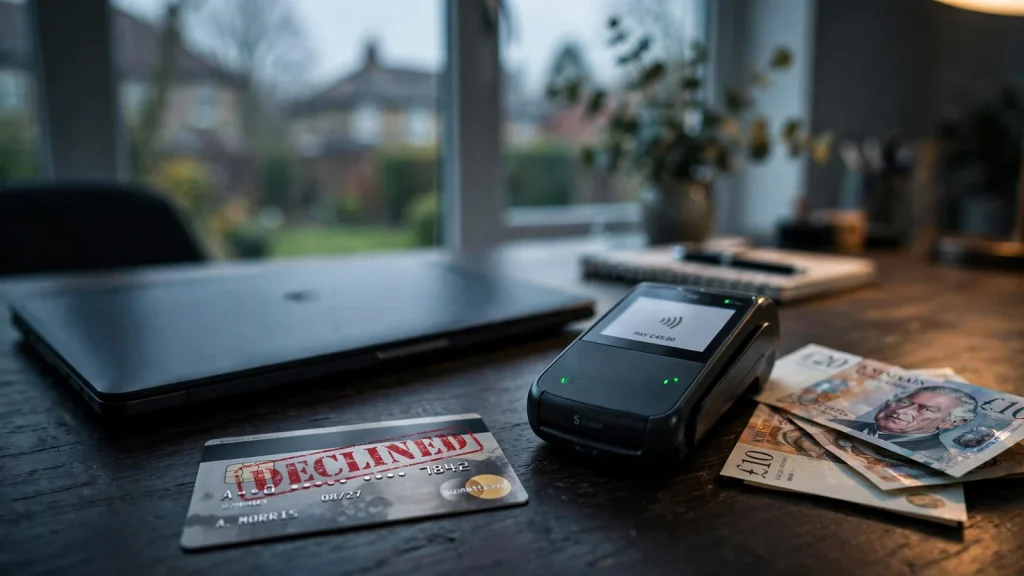
UK-licensed online casinos do not accept credit cards for gambling; debit cards and other eligible methods may be available.
Can You Use a Credit Card to Gamble Online in the UK?
No. You cannot use a credit card to deposit for gambling at a UK-licensed online casino. That includes trying to fund an online slots account: the answer is still no. If a site gives the impression that credit-card gambling is an option for UK customers, do not treat that as a green light.
The practical alternative is to use an eligible payment method that is not a credit card. UK casinos commonly accept debit cards, including Visa and Mastercard. That does not mean every card or account will work at every casino, so check the payment options shown to you before you try to deposit.
I would keep the distinction plain: a card bearing the Visa or Mastercard name is not automatically a credit card, and the payment route matters. A debit card draws on money in your bank account; a credit card borrows against a credit facility. If you are unsure which kind of card you have, check with your card provider rather than guessing from its appearance or branding.
The same goes for phrases such as “card payment” in a cashier. That wording alone does not tell you that credit-card funds are accepted for gambling. At a licensed casino, a payment option must not be used to get around the restriction. If the cashier is unclear, pause and ask the operator how that specific payment would be processed. I would rather lose a minute checking than find out later that I misunderstood the route.
There is another basic point worth keeping in view: UK online gambling is legal only through sites holding the relevant UK Gambling Commission licence. A site’s claims about where it is based, what it accepts, or how easy it is to join do not replace that requirement. For a real-money casino serving British customers, a UK licence is part of the ground rules, not a decorative badge.
UK casino sites that accept Jeton: what to check
So, can you use a credit card at an online casino in the UK? Not at a UK-licensed casino. Can you play online slots with one? No. Choose an eligible alternative, such as a debit card, and make sure the account and payment option are actually available to you before you proceed. “Card accepted” is not the same as “credit card accepted”. Small wording, big difference.
I know the temptation is to search for a workaround when a familiar payment method is refused. I would not assume that a different label, an intermediary, or a site’s marketing changes what is permitted. If you cannot tell whether a payment method involves credit-card funds, do not use it for a gambling deposit until the operator has clarified it. There is no need to turn a straightforward payment decision into a guessing game.
Also, a declined deposit is not a reason to keep trying random card details or alternate routes. Check that you have selected the right payment type and that the method is one the casino actually offers to you. If it remains unclear, stop there and contact the operator through its customer-support channel. A legitimate alternative should be clear without you having to disguise the source of the money.
That is the useful answer for anyone asking whether they can deposit at an online casino with a credit card in the UK: no, not at a UK-licensed gambling site. Use a permitted alternative instead, and do not mistake a general card logo or vague cashier label for permission. Debit cards are a familiar option at UK casinos, but availability still needs checking on the account you plan to use.
Why the UK Credit Card Gambling Ban Still Matters
The UK credit-card gambling ban took effect on 14 April 2020. It remains in force; it has not been relaxed since. So the answer to whether credit cards are allowed for gambling at UK online casinos is still no.
That date matters because the restriction is not a temporary policy or a rule that quietly expired. Remote gambling licensees serving the British market are still bound by it. A payment route does not become acceptable just because it looks different from entering card details directly at a casino.
Credit Card Ban
Using credit-card funds routed through a money service business to fund gambling is prohibited and does not make the payment eligible.
That last point is easy to miss. The ban also covers credit-card funds routed through a money service business. In other words, sending credit borrowed on a card through an intermediary does not turn it into an eligible gambling payment. The route may add a step, but it does not change where the money came from.
I used to think that payment rules were mostly about the cashier’s labels: if a site displayed a method, I assumed it was fair game. That is the wrong way to read this rule. The important question is not whether a transaction can be made to go through, but whether the funds are being supplied as credit-card payments for gambling. A workaround is not permission.
The restriction matters for the boundary it sets, too. A casino may describe its payment options in broad terms, and a third-party service may sit between your card and the gambling account. Neither detail cancels the rule. If credit-card funds are being channelled to gambling through a money service business, that route is covered as well.
This is about the gambling payment, not a general claim that credit cards cannot be used for ordinary purchases. The ban applies when credit is used to fund gambling. Keeping that distinction clear helps avoid confusing a card’s general availability with permission to use it for a casino deposit.
The date is worth remembering because old pages and posts can linger online long after a rule changes—or, in this case, does not. Advice that suggests the restriction has been lifted, or that a transfer through an intermediary gets around it, does not match the current rule.
There is no clever reading of the date or the payment chain that makes credit-card gambling acceptable at a UK-licensed casino. The ban is still there. No loophole.
Casino Sites That Accept EcoPayz in the UK
What the Credit Card Ban Means for Casino Payments
The practical rule is about the money used for gambling, not just the logo shown beside a deposit button. A UK-licensed casino cannot accept credit-card payments for gambling. That remains true if the payment is routed through a digital wallet that lets you use credit-card funds to gamble. Changing the middle step does not turn those funds into an eligible payment.
I used to read a payment logo as a simple yes-or-no answer: if the brand appeared, I assumed I could pay that way. It is not that simple. A wallet can hold money added through different sources, and its availability does not mean every balance in it can be used at a casino. Where credit-card funds can be used for gambling, a UK-licensed casino cannot accept that wallet payment.
That distinction matters when a cashier offers a wallet but does not make the funding source clear. Do not treat the wallet name alone as proof that the transaction is permitted. Check the wallet’s funding rules and the casino’s payment terms; if the route would let you use credit-card money for gambling, it is not an acceptable workaround. No clever detour.
This restriction also applies to the casino’s payment processing, not only to what a customer sees on screen. A payment does not become acceptable merely because a third party sits between your card and the gambling account. UK-licensed remote gambling operators must not accept credit-card payments for gambling, including credit-card funds routed through a money service business. The point is to prevent the restricted funds from reaching the gambling balance through another channel.
UK-licensed remote gambling operators must not accept credit-card payments for gambling, including funds routed through a money service business.
There can be confusion between a credit card and another payment product connected to the same provider. They are not automatically interchangeable. A wallet balance funded from a permitted source is different from credit-card funds being made available for gambling, but you should not guess which applies to your account. The provider’s funding record and the casino’s rules matter. If they are unclear, pause before depositing rather than testing the route with money.
Deposits and withdrawals can also follow different paths. Anti-fraud and anti-money-laundering controls commonly require a casino to return funds to the original payment source. That can make a deposit route relevant later, even if the payment seemed straightforward at the time. If an alternative route requires extra verification, you may need to provide further information before the casino can process it.
In plain terms, a wallet is not a loophole, and a payment brand is not permission to use every source of money behind it. The relevant question is whether the funds being used for gambling are credit-card funds and whether the route is allowed by the casino’s rules. Keep that distinction in mind when reading a cashier: what matters is the funding route, not just the button you press.
Which Payment Methods Can You Actually Use?
Once credit-card payments are off the table at a UK-licensed casino, the cashier may still offer several ways to fund an account. The list is not a promise that every method will work for every customer, and a method shown on one site may be absent on another. I’d treat the cashier as the practical menu, not a payment logo on a promotional page.
Payment Methods for UK Casinos: Compare Options
Debit cards are a familiar option. UK casinos commonly accept Visa and Mastercard debit cards, but that does not mean every card product is eligible. The card must be a debit card, and the casino’s own payment options determine whether it can be used there.
PayPal is another name you may see. A specialist review describes it as popular for speed and convenience, but that is not a guarantee of availability at a particular casino. Check the promotion terms too: a PayPal deposit may not qualify for a bonus, even when the payment itself is accepted. “Bonus eligible” can have a catch.
Bank transfers and open banking are also worth checking. A specialist review reports that these can support instant deposits and fast withdrawals at many sites. The exact route matters, though: the cashier may present a bank connection service rather than a conventional transfer, and the available options can vary.
Prepaid vouchers work differently. Paysafecard is for deposits only, so do not treat it as a complete deposit-and-withdrawal route. If you choose it, check how the casino handles a payout before putting money in; another payment method may be needed later.
Skrill and Neteller are e-wallets available at some sites. Specialist reviews report that these options are often excluded from promotions, so read the offer conditions before depositing if a bonus matters to you. Their presence in a cashier does not automatically mean they are suitable for every account or transaction.
The useful distinction is not simply “card or wallet”. Some methods can cover both ends of the transaction, while a deposit-only voucher cannot. A payment logo also says little about whether your account can use that route right now. I’ve learned not to assume the method I used elsewhere will appear in a new cashier.
Debit Cards
Commonly accepted Visa and Mastercard products, though availability depends on the casino.
PayPal
Popular for speed and convenience, though it may not always qualify for bonuses.
Bank Transfers
Includes open banking for instant deposits and fast withdrawals at many sites.
Prepaid Vouchers
Options like Paysafecard are for deposits only and require other methods for payouts.
Before choosing, look at the available deposit and withdrawal routes together, and check whether the method is eligible for any promotion you intend to claim. If the details are unclear, pause and ask the casino rather than finding out after a deposit. A few minutes of checking beats a payment surprise.
How to Check Whether a Casino Payment Option Fits
A payment logo on a casino page is a starting point, not proof that your own card will work. I’ve learned to check the cashier before treating a method as available: the list on a general payments page may not reflect what a particular customer can use.
A specialist review may list Visa and Mastercard, for instance, but the operator’s live cashier is where you need to confirm current UK availability and whether your card product is supported. A logo does not tell you whether the option is enabled for your account, or whether a debit card and a credit card are being treated differently. That distinction matters: UK-licensed casinos cannot accept credit-card payments for gambling. A card logo is not permission to use credit.
Check the cashier while signed in
If possible, open the deposit page after signing in, rather than relying on a list of payment options shown before registration. Read the wording beside the method and follow the operator’s instructions for entering your details. If the cashier does not show the option, or rejects the card, do not assume that trying another route will make a prohibited credit-card payment acceptable.
Casinos That Accept Wirecard in the UK: What to Check
Pay attention to the actual card product, not just the network printed on it. Two cards carrying the same network logo may not have the same function. If the page is unclear about whether your card is eligible, ask the operator before attempting a payment. A declined transaction can leave you guessing whether the issue was the product, account settings or some other restriction.
The same check applies to other payment methods: seeing a name mentioned somewhere on a site does not establish that it is active for every customer. I would rather spend a moment checking the cashier than rely on a broad claim that a method is “accepted”. Small print, account status and the route offered at checkout can change the practical answer.
Confirm the account currency
Check what currency the casino account will use before making a deposit. A specialist review may state that a site supports GBP, but you should confirm the currency shown in your own account or cashier before the first transaction. If your payment account and casino balance use different currencies, conversion may apply.
Do not treat a pound symbol elsewhere on the site as confirmation that your account is set to pounds. Look for the currency shown during registration, in account settings or on the final payment screen. If it is unclear, ask support to confirm the account currency before paying. That is easier than discovering a mismatch after the transaction.
Pause if the details do not line up
Before confirming, check that the cashier names the method you intend to use, that your card product is eligible, and that the amount is displayed in the expected currency. If the payment page gives a different answer from the general site information, treat the live cashier as the point to clarify with the operator—not as a reason to try workarounds.
Do
- Open the deposit page while signed in
- Confirm the account currency
- Ask support if a method is unclear
Don’t
- Rely on general payment lists
- Assume “card accepted” means credit cards
- Submit payments without clear answers
I also avoid reading “card accepted” as a promise that every card will pass. It may describe a payment network, while your particular product or account is not eligible. If you cannot get a clear answer, do not submit the payment. A quick check beats a confusing transaction.
What a Casino Deposit and Withdrawal Can Involve
A deposit and a withdrawal are separate stages, even when they use the same payment method. I used to treat the first one as a preview of the second: money went in quickly, so surely it would come back just as quickly. That is not a safe assumption. And a credit card is not a permitted gambling deposit route at a UK-licensed casino; any deposit needs to use an eligible alternative.
The minimum deposit can change with the payment method and the casino’s terms. Check the cashier before you confirm, rather than relying on an amount remembered from another site or an old page. The same goes for maximums: they may depend on the method and the status of your account. A figure shown for one route does not necessarily apply to another.
The speed gap can be striking. A specialist review describes card deposits as potentially instant while a payout may take several business days. That is not a promise about every casino or payment, but it captures why “instant” at the deposit stage tells you little about when a withdrawal will arrive.
Casinos That Accept Citadel in the UK: What to Check
Why a payout may take longer
A withdrawal has more steps than pressing a button. The casino may need to review the request internally before releasing funds. KYC can add another pause, particularly if the account has not yet been fully verified. A specialist review notes that first withdrawals can take longer while verification is completed; the timing still depends on the operator’s process and your account.
I would not plan around a payout arriving on the same timetable as a deposit. Check the cashier’s stated withdrawal process, and look for what happens after the casino approves the request. The casino’s review and the onward payment are distinct parts of the journey. Weekends or banking arrangements may also affect when money is available, so a displayed processing estimate is not the same as a guaranteed arrival time.
First payout? Allow for checks.
Where the money may be sent
UK anti-money laundering rules commonly require a casino to return funds to the original payment source. This is part of the closed-loop approach: the route used to put money in can shape the route used to pay it back. So before depositing, check whether that method supports withdrawals as well as deposits. A deposit-only option cannot, by itself, carry the payout back.
If the original source cannot receive a withdrawal, the casino may ask you to use an alternative route or provide further information. That can mean extra verification, not an instant workaround. Read the cashier’s instructions and contact the operator if the payout route is unclear before you deposit. It is much less frustrating to sort that out in advance than to discover it with a withdrawal pending.
Attention: UK anti-money laundering rules commonly require casinos to return funds to the original payment source.
The account and payment method also need to match the casino’s requirements. If details do not line up, the operator may need to establish who owns the payment source before releasing funds. That can create avoidable friction, even where the deposit itself went through without trouble.
Treat the cashier’s terms as transaction-specific: minimum deposit, withdrawal eligibility, processing stages and any verification requirements. They matter more than a broad claim that a payment is “fast”. I learned to separate the moment money leaves my account from the moment a casino approves a payout. Different steps. Different clocks.
How to Compare Casino Payment Costs
A payment can look free at the cashier and still cost you elsewhere. When I compare options, I look beyond any fee shown beside the deposit button: the casino, payment provider, card issuer or bank, currency conversion and payment network can each affect the total.
That comparison only makes sense for a permitted payment route. Credit-card payments for gambling are not an option at UK-licensed casinos, so the useful question is what an eligible method will cost for the amount you actually intend to deposit. “Free” can be a slippery label.
Follow the money, not the headline
Start with the casino’s terms and cashier. Check whether it charges for the transaction, then look at the payment provider’s own fee information. If you use a debit card or bank service, your bank may also apply charges under your account terms. A card issuer’s rules can matter too.
Then check currency. If your casino account and payment account use different currencies, a conversion may take place. The displayed exchange rate can include a spread: the difference between the rate applied to your transaction and a reference rate. A specialist payment review notes that this spread can outweigh a visible flat fee. So a method with no obvious charge is not automatically the cheaper one.
Casinos That Accept Upaycard in the UK
There may also be a network cost, depending on the route used. I used to stop at the first “no fee” message and call it settled. That was too quick. The total is what matters.
Compare like with like
A fair comparison uses the same deposit amount, account currency and transaction direction. If one method is priced in pounds and another triggers conversion, comparing only their stated fees misses a major part of the cost. Check the amount that will leave your account, not just the amount the casino says it will receive.
A specialist payment review describes the possible cost components as casino charges, provider fees, bank or issuer fees, currency spread and network costs. Treat that as a checklist, not a claim that every transaction carries every charge. Which parts apply depends on the casino, the provider and your own account.
Also separate deposit costs from withdrawal costs. A method may have different terms for each, and an apparently cheap deposit does not prove the full payment route is inexpensive. Read the relevant terms for both sides before you commit.
Don’t expect one cheapest method
There is no universal winner. A specialist payment review likewise advises comparing casino and provider charges, conversion spread and network costs against the actual transaction. The result can change with the amount, currency and accounts involved.
For a practical check, I’d write down what each route charges at each stage, including any exchange rate shown before confirmation. If the fee information is unclear, ask the casino or provider before paying rather than trying to reverse-engineer the cost afterwards. Save the terms or confirmation screen, too; it gives you something concrete to refer back to if the final amount differs from what you expected.
Payment Cost Comparison
- Compare the total effect on your balance, not marketing labels
- Check for currency conversion spreads and network costs
- Distinguish between casino charges and bank/issuer fees
- Separate deposit costs from withdrawal costs
If you’re choosing between two eligible methods, compare their total effect on your balance, not their marketing labels. “Instant” describes timing, not price. “No fee” may refer only to the casino’s own charge. And a low visible charge can be offset by conversion costs elsewhere.
I wouldn’t pick a payment method just because a page calls it the cheapest. Check the cashier, the provider’s terms, your bank’s charges and the currency handling for your own account. Then decide whether the convenience is worth any extra cost. No magic bargain.
Credit Cards, GamStop and the Claims You Should Question
A site described as “not on GamStop” is not exempt from the UK credit-card gambling ban. GamStop is a self-exclusion scheme; it does not determine whether a remote gambling licensee may accept credit-card payments for gambling. That restriction applies to UKGC-licensed operators regardless of whether they participate in the scheme.
So when a page claims that a non-GamStop casino accepts credit cards from UK players, I would not treat the wording as proof that the payment route is lawful or available. The claim may blur together different things: a payment logo on a page, a card product that is not a credit card, or an operator outside the UK regulatory system. None of that changes what a UK-licensed casino can accept.
There is another distinction worth keeping clear. An offshore site may be accessible from Britain, but accessibility is not the same as holding a UK Gambling Commission licence. Remote gambling operators selling into the British market must have the relevant UK licence. Offshore casinos sit outside that regulatory system, so a claim about their payment options is not reassurance that they follow UK rules or provide the protections expected of a UKGC licensee. I would not use “not on GamStop” as a shortcut for judging safety.
GamStop is there to support people who have chosen to self-exclude, not to point them towards another way to gamble. If you have self-excluded, looking for a site outside the scheme can undermine the boundary you set for yourself. There is no payment method or operator status that turns that into a safer workaround.
Account limits are a separate protection. UKGC rules require remote operators to ask new customers to set a financial limit before their first deposit and to make account-level limit controls accessible. Those tools can help you manage spending, but they do not make credit-card payments permissible and are not a substitute for self-exclusion.
I have learned not to let a confident payment claim do the checking for me. Look at whether the operator is licensed for the British market and what its own cashier actually permits; do not infer either from a GamStop label or a card logo. If the offer depends on getting around a restriction, that is a reason to stop and check, not a clever loophole. Short version: the label changes nothing.
Keeping Deposits and Payouts on a Clear Payment Trail
I used to treat the deposit screen as a one-way step: choose a method, pay, get on with it. The awkward part can come later, when a withdrawal is due and the casino needs to establish who owns the account and where the money should go. Keeping those details consistent from the start can save avoidable back-and-forth.
Use a gambling account and a payment account both in your own name to avoid avoidable friction during withdrawals.
Use a gambling account in your own name and, where possible, a payment account that belongs to you too. A payment made from someone else’s card or wallet can leave basic ownership details unclear. That does not mean every mismatch will cause a problem, but it gives the operator something extra to check. Not worth the hassle.
The simplest arrangement is often one named account used for both deposits and withdrawals. If you choose a payment route, check that it is linked to your own details and keep access to it. Changing accounts or trying to send a payout somewhere unrelated to the deposit may interrupt the process while the operator checks the request.
There is another reason a casino may return money to its original source: closed-loop rules help with anti-fraud and anti-money-laundering checks. So do not assume you can deposit one way and freely pick a different destination for the payout. If returning funds to the original source is not possible, an alternative route may involve additional verification.
That can mean responding to a KYC request and supplying information the operator asks for to confirm ownership. Keep your account details accurate, and use genuine payment information that matches them. If you are asked to verify a payment method, follow the casino’s instructions through its official account channels rather than sending sensitive details in response to an unexpected message.
When I see a payout held for checks, I try not to treat it as proof that something has gone wrong. But clear ownership details make the basic question easier to answer: does this account and payment route belong to the same customer? Keep that trail simple, and you are less likely to create friction that could have been avoided.
Playing Slots Without a Credit Card
If you’re looking for a UK casino that accepts credit cards, check the payment methods available to you before signing up. The details below give you each listed operator’s stated payout speed, but do not confirm credit card acceptance.
1. Zombillion
Payout speed: 1-3 business days Zombillion has a stated payout speed of 1–3 business days. This information alone does not confirm whether you can deposit by credit card.
2. NightLuck
Payout speed: 1-3 business days NightLuck has a stated payout speed of 1–3 business days. Check its payment options directly to confirm whether credit card deposits are available to you.
3. Chanze
Payout speed: 1-3 business days Chanze has a stated payout speed of 1–3 business days. The available information does not specify whether it accepts credit cards.
4. WinBeast
Payout speed: 1-3 business days WinBeast has a stated payout speed of 1–3 business days. You’ll need to check its payment methods to establish whether credit card deposits are supported.
5. Amunbet
Payout speed: 1-3 business days Amunbet has a stated payout speed of 1–3 business days. No credit card deposit information is provided.
6. BeOnBet
Payout speed: 1-3 business days BeOnBet has a stated payout speed of 1–3 business days. This detail does not establish whether you can use a credit card to deposit.
7. EvoSpin
Payout speed: 1-3 business days EvoSpin has a stated payout speed of 1–3 business days. Check directly with the operator for information about credit card deposits.
8. Dieselwin
Payout speed: 1-3 business days Dieselwin has a stated payout speed of 1–3 business days. The available details do not say whether credit cards are accepted.
9. NightWin
Payout speed: 1-3 business days NightWin has a stated payout speed of 1–3 business days. You’ll need to verify its current payment options to confirm credit card acceptance.
10. Revery Play
Payout speed: 1-3 business days Revery Play has a stated payout speed of 1–3 business days. No details are provided about whether it accepts credit card deposits.
If you want to play online slots at a UK-licensed casino, a credit card is not an eligible way to fund your account. That applies even if the cashier displays card logos or you can use a wallet: a wallet cannot be used for gambling where it lets you pay with credit-card funds.
I used to treat the payment button as the whole story. It isn’t. Check the cashier for a method you can actually use, rather than assuming a credit card will work because it is familiar. Debit cards are a common alternative at UK casinos, including Visa and Mastercard, though the options shown can depend on the casino and your account.
Once you have a suitable deposit method, the slots themselves still come with rules that shape how play works in Britain. Autoplay is banned for online slots, so you cannot set a game to keep spinning unattended. Each spin must also last at least 2.5 seconds. That can make play feel slower than the rapid, hands-off sessions some older games or overseas sites suggest. No automatic run. No instant spin.
There is also a maximum stake per game cycle: £5 for customers aged 25 and over, and £2 for those aged 18 to 24. The £5 limit for all adults took effect on 9 April 2025. Those are stake limits, not a guide to what you should spend. Before depositing, set a financial limit you can live with; remote operators must prompt new customers to set one before their first deposit and provide account-level controls.
A credit-card-free deposit does not make slots risk-free, and a fast payment does not make a session easier to manage. I find it helps to decide the amount and stopping point before opening a game, rather than trying to make that call after a loss. If you feel your play is getting away from you, use the casino’s account tools, including self-exclusion, or step away.
The practical choice is straightforward: use an eligible alternative, check the rules shown in the game, and don’t treat a slot’s pace as permission to rush. Slot play has limits. Your budget should too.
Why can a fast payout casino still delay my withdrawal?
Your withdrawal may wait for the casino’s internal approval, and a first payout can take longer if your account still needs verification.
Why must withdrawals return to the deposit method?
Returning winnings to the original payment source is a common anti-fraud and anti-money-laundering control. Using another route may require extra verification.
Which method has the lowest fees?
There is no universally cheapest method. Compare the casino’s and provider’s charges, any bank or issuer fees, currency-conversion spread, and network costs for your payment.
Is Skrill available?
Yes, Skrill is offered at some UK-friendly casinos and remains a common deposit option. It may be excluded from promotions.
What is the fastest withdrawal method for UK casinos?
PayPal, open banking services, and debit cards linked to fast payout systems are generally among the quickest. The casino’s approval process and your verification status also affect timing.
Do UK casino withdrawals require verification?
Your account may need verification before a withdrawal is completed, particularly for a first payout. Make sure your account details and payment method belong to you to avoid avoidable delays.
Are fast casino withdrawals guaranteed?
No. The timing depends on the casino’s approval process and whether your account is fully verified.
Payments

Anonymous Crypto Casinos in the UK: What to Know
Understand how crypto payments, possible verification checks, offshore rules and bonus terms shape the risks...

BNB Casino Comparison for UK Players: Payments and Licensing
BNB acceptance describes a site's payment claim, while UK licensing is a separate issue and...

Bitcoin Cash casinos in the UK: licensing and payments
Bitcoin Cash may appear at offshore casinos, but UK-licensed operators cannot accept cryptocurrency as a...

Cardano ADA Casinos in the UK: How to Compare
A practical distinction between UK-licensed gambling protections and offshore sites that advertise ADA deposits. What...

UK Casino Sites That Accept Debit Cards
Card acceptance depends on more than the network logo, and a successful deposit does not...

Casino Sites That Accept EcoPayz in the UK
EcoPayz became Payz, but a familiar label does not guarantee the option is available for...

UK casino sites that accept Jeton: what to check
Jeton availability can vary, and depositing does not guarantee the same route will be available...

UK casino sites that accept Skrill: what to check
Skrill availability can depend on the account and transaction, so the cashier, withdrawal rules, currency...

Casinos That Accept Apple Pay in the UK
Apple Pay uses a wallet, while Boku charges deposits through a mobile network; availability and...
Casinos That Accept AstroPay in the UK: Payment Checks
AstroPay availability depends on the casino cashier and account, while game access and payout routes...

Casinos That Accept Bank Cheques: Boku Explained
Boku charges a mobile bill or prepaid balance, so it does not provide a bank-cheque...
Casinos That Accept Bank Transfers in the UK
The article focuses on Boku and other pay-by-phone options, explaining their limits and how they...

Casinos That Accept Bitcoin in the UK: What to Check
Payment availability, bonus eligibility and account conditions all affect whether a Bitcoin casino offer is...

Casinos That Accept Boku in the UK: What to Check
Boku availability varies by casino, and deposits may depend on network support, spending limits and...

Casinos that accept CashToCode in the UK
CashToCode availability, bonus eligibility and withdrawals are separate checks, so a listed deposit option does...

Casinos That Accept Citadel in the UK: What to Check
Payment availability does not confirm a casino’s game selection, bonus conditions or withdrawal process; each...

Casinos that accept Click2Pay in the UK
A cashier listing, promotion terms and withdrawal rules answer different questions about using Click2Pay at...

Casinos That Accept ClickandBuy in the UK
Payment availability, bonus eligibility and withdrawal rules are separate checks, and the cashier may not...
Casinos That Accept Debit Cards in the UK
Debit-card acceptance is only one part of the decision; the cashier shows which options are...

Diners Club Casinos in the UK: Card Rules and Payments
Diners Club acceptance depends on the specific card product, while UK gambling rules exclude credit-card...

Casinos That Accept Dogecoin in the UK
A cashier check helps distinguish a named Dogecoin option from broad cryptocurrency claims and review...
Casinos That Accept E-Wallets in the UK: Payment Guide
E-wallet availability depends on the operator, account and transaction, while withdrawals may involve steps beyond...

Casinos That Accept E-checks in the UK: What to Check
E-check labels can be used loosely, so availability and the exact payment type need checking...
Casinos that accept e-cheques in the UK: how to check
Payment menus can vary by operator and account, so cashier listings are more useful than...

Casinos That Accept EntroPay in the UK: What to Check
A casino’s payment information may not reflect what is available to a UK account, and...

Casinos That Accept Ethereum in the UK: What to Check
Ethereum availability depends on the payment options shown for an account, while fees, bonus rules...

Casinos That Accept Giropay in the UK: What to Check
A payment method is only usable when it appears in the live cashier and can...

Casinos That Accept Google Pay in the UK
Google Pay availability is only one part of the decision: promotion terms, account details and...

Casinos That Accept iDEAL in the UK: What to Check
Payment menus can vary by operator and account, so a general site claim is not...

Casinos That Accept InstaDebit in the UK: What to Check
InstaDebit availability, matching account details, bonus terms, withdrawal routes and deposit limits all affect how...

Interac Casinos in the UK: Availability and Bonus Terms
The guide separates UK Interac availability from deposit, withdrawal and bonus conditions, and explains what...

Casinos that accept Klarna in the UK: what to check
An open account, an available payment method and a qualifying bonus deposit are separate details...

Casinos That Accept Litecoin in the UK
General crypto references and payment logos may not show whether Litecoin can be selected for...

Casinos That Accept Maestro in the UK
A cashier listing confirms only a payment option; game eligibility, bonus terms and withdrawal routes...
Casinos That Accept Mastercard in the UK: Debit or Credit
Mastercard debit may work at UK casinos, while credit-card gambling payments are barred; deposits, withdrawals...

Casinos that accept MiFinity in the UK: payment guide
MiFinity being available in a cashier does not guarantee that deposits qualify for welcome offers,...
Casinos That Accept Monzo in the UK: What to Check
Boku listings do not establish that a casino accepts Monzo, and phone-bill deposits cannot be...

Casinos That Accept MuchBetter in the UK
MuchBetter availability depends on the casino cashier and account, while currency, limits, bonus terms and...
Casinos that accept Neosurf in the UK: what to check
A Neosurf deposit is only part of the route: availability, account checks, bonus terms, fees...

Casinos That Accept Neteller in the UK: What to Check
Neteller availability does not guarantee bonus eligibility; cashier terms, withdrawals, limits and safeguards vary by...

Casinos That Accept Pay by Phone in the UK
See how Boku works at the cashier, what to check about deposit limits and bonuses,...

Casinos That Accept PayPal in the UK: What to Check
PayPal availability, game selection, account access and bonus conditions are separate details to verify before...

Casinos that accept POLi in the UK: what to check
Payment availability can vary by country and account, and a listed method may not be...

Casinos That Accept Revolut in the UK: Payment Guide
A Revolut deposit may be accepted without qualifying for a promotion, so payment options and...

Casinos That Accept Ripple XRP in the UK
A crypto label alone does not confirm XRP deposits, UK availability or use across casino...

Casinos That Accept Siru Mobile in the UK
Siru Mobile deposits may not qualify for every bonus, so eligibility depends on the payment...

Casinos That Accept Solana in the UK: What to Check
A Solana mention alone does not confirm account funding; acceptance depends on the operator’s current...

Casinos That Accept Tether in the UK: Payment Checks
A practical check of cashier availability, network selection, payment conditions and withdrawal requirements before funding...

UKash Casinos in the UK: How to Check Payment Options
A casino’s general payment list does not prove UKash is available; the option must appear...

Casinos That Accept Upaycard in the UK
Upaycard availability can depend on the card product and account, so a general card-payment listing...

Casinos That Accept USDC in the UK: What to Check
USDC availability, bonus eligibility and the rules for slot play are separate questions, so each...

Casinos That Accept Visa in the UK: What to Check
A Visa logo is only a starting point: cashier availability, account details and bonus terms...

Casinos That Accept WebMoney in the UK: Licence Checks
A WebMoney option shows how a deposit may be made, but it does not establish...

Casinos That Accept Wire Transfers in the UK
A casino’s banking label can cover different payment routes, so the cashier details matter when...

Casinos That Accept Wirecard in the UK: What to Check
A Wirecard listing does not confirm bonus eligibility, slot access or that the same route...

Casinos That Accept Zimpler in the UK: What to Check
A casino’s payment page may not reflect what is available for your account, so the...

Instant Bank Transfer Casinos in the UK: What to Check
A bank-transfer label does not confirm availability or speed, and deposits and payouts can follow...

iPad Casinos UK: How to Choose and Play Safely
A practical guide to access options, cashier checks, payment routes, free slots and game features...

Mobile top-up casinos in the UK: payment guide
A guide to phone-bill deposits, including cashier checks, SMS confirmation, bonus terms and the separate...

Online Casinos That Accept SMS Deposits: What to Know
SMS deposits begin in the casino cashier and use a texted code for authorisation, while...

Pay by Mobile Casinos in the UK: How It Works
Mobile slots describe the playing experience, while phone-billed options fund deposits and may have separate...

Pay by Phone Bill at UK Casinos: How It Works
Payforit deposits use contract billing or existing Pay as You Go credit, with limits, fees...

Pay by Phone Casinos UK: How Deposits Work
Payforit routes casino deposits through a mobile account, with different effects on contract bills and...

Payforit Mobile Casinos UK: How Payments Work
Payforit is a mobile-focused deposit option, and its availability and terms depend on the casino’s...

Casinos That Accept Direct Banking: UK Guide
Direct banking may use an Open Banking authorisation or a conventional bank transfer, and the...

TRON TRX Casino Comparison for UK Players
A practical look at what TRON casino labels establish, what remains unverified, and why UK...

UK Crypto Casinos With No KYC: Rules and Risks
A practical guide to UK licensing, crypto deposits and withdrawals, bonus terms, and the limits...