
High-Volatility Slots in the UK: How They Play
 Available in GB
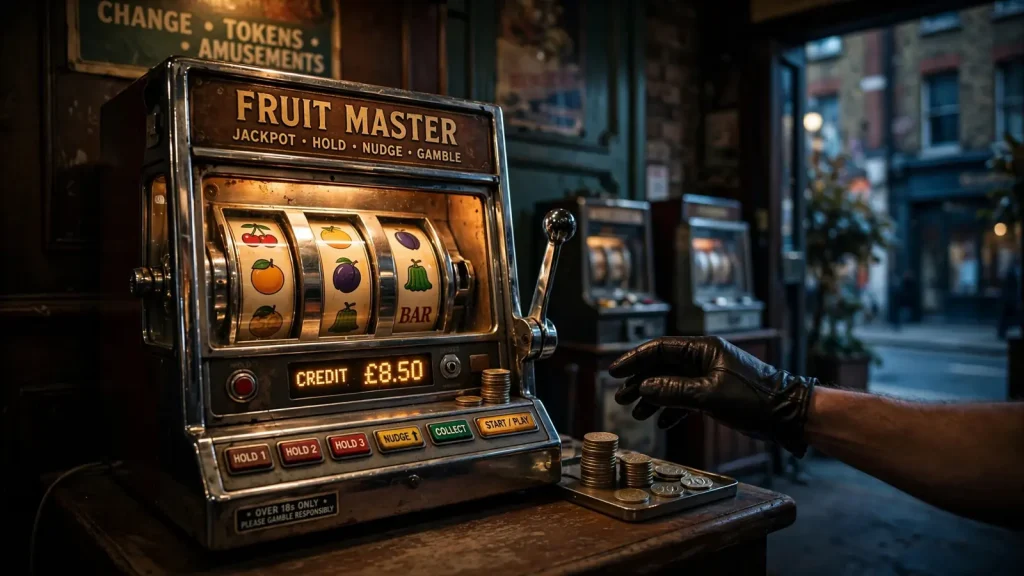
High-volatility slots tend to pay less often, with potentially larger wins, but that pattern cannot predict the outcome of any spin.
What “High Volatility” Means When You’re Playing
Volatility describes the shape of a slot’s returns, not a promise about what your next spin will do. A high-volatility slot tends to pay out less often, with wins that may be larger. A low-volatility slot tends to spread returns across more frequent, smaller wins. That is the useful distinction when you are trying to understand what people mean by a high-volatility slot.
I used to read “high volatility” as a polite way of saying “big prizes”. That misses half the picture. The larger wins are only one side; the other is that payouts come less often. The label describes a pattern, not a schedule. It cannot tell you when a win will land, or whether a particular session will include one.
Low volatility has its own pattern. Smaller returns are distributed more often, so the game may feel more active as you play. That does not mean every spin pays, or that frequent wins make a game more profitable. A win can return less than the stake that produced it. The size and frequency of payouts are separate from the question of whether you are ahead overall.
High-volatility slots can involve pronounced swings, so it helps to check the practical details available before choosing where to play. Use these verdicts as a concise reference, and review the terms that apply to you.
1. Zombillion
Payout speed: 1-3 business days You can expect payouts to take 1–3 business days. That is the only confirmed detail provided here.
2. NightLuck
Payout speed: 1-3 business days Payouts are listed as taking 1–3 business days. No other operator-specific details are available here.
3. Chanze
Payout speed: 1-3 business days The stated payout speed is 1–3 business days. Use that as the available practical detail when considering this option.
4. WinBeast
Payout speed: 1-3 business days You have a stated payout timeframe of 1–3 business days. No further features are confirmed in the information provided.
5. Amunbet
Payout speed: 1-3 business days Payouts are reported to take 1–3 business days. That is the only verified point available for this reference.
6. BeOnBet
Payout speed: 1-3 business days The available information gives a payout speed of 1–3 business days. There are no other confirmed details to add.
7. EvoSpin
Payout speed: 1-3 business days You can use the stated 1–3 business day payout speed as a practical point of reference. No other attributes are provided.
8. Dieselwin
Payout speed: 1-3 business days The listed payout timeframe is 1–3 business days. That is the only confirmed operator detail available here.
9. NightWin
Payout speed: 1-3 business days Payouts are stated to take 1–3 business days. No other operator-specific information is available to assess.
10. Revery Play
Payout speed: 1-3 business days The confirmed payout speed is 1–3 business days. Treat this as the available practical detail, rather than an assessment of other features.
When someone asks what slots have high volatility, the honest answer is that the label is a characteristic of an individual game, not a guarantee attached to a whole category. Two slots can look similar and still have different payout patterns. A dramatic theme or a feature advertised with words such as “massive” does not establish volatility. Marketing is not a measurement.
So, do you want high or low volatility? That depends on which pattern you find easier to sit with. If you prefer smaller wins appearing more often, low volatility may feel more familiar. If you are comfortable with payouts being less frequent and potentially larger, high volatility may be the pattern you are looking for. Neither description says which game will suit every player, and neither makes a result predictable.
I now treat volatility as a way to set expectations about the kind of payout pattern a game tends to have. It is not a shortcut to finding a guaranteed winner, and it does not tell me what the next spin is worth. That distinction sounds obvious once you have learned it the expensive way. I did not.
What a Slot Machine Bet Actually Covers
When you set a stake on a slot, the useful question is not just “How much am I putting in?” It is also “What part of the game does that stake cover?” The answer depends on how the machine applies a bet. With a five-reel slot, a bet can be applied across all five reels. That tells you the reels included in the wager; it does not, by itself, explain every rule used to assess a result.
Best Video Slots in the UK: Reels and Stakes
I used to look at the stake figure and assume it was self-explanatory. It wasn’t. A number on a button or game panel can be easy to read as the cost of one spin, but the important detail is how the game describes the bet being placed. A five-reel layout is a picture of the game, not a complete explanation of the wager.
Reels, lines and the bet
The reels are the vertical sections that display symbols. A five-reel slot has five of them, and a bet may cover all five. That is the basic mechanical point. It doesn’t mean that you are making five separate bets, one per reel, and it doesn’t mean that the stake should be multiplied by five. The wording matters: the bet is applied across the reels.
A game may also describe ways that symbols can form a winning combination, such as paylines or other patterns. Those are part of how a result is evaluated; the reels are where the symbols appear. It is easy to muddle these ideas because the game presents them together. I try to keep the questions separate: which reels are involved, what stake is being placed, and what pattern does the game recognise?
Don’t assume the word “reel” tells you the size or structure of the bet. Five reels tell you about the layout. They don’t tell you whether every possible line is active, how the stake is divided, or how much a particular combination pays. Those details have to come from that game’s own rules and betting display. If the game doesn’t make the terms clear to you, guessing from the artwork is a poor substitute.
Checking Your Bet
- Identify the number of reels involved
- Confirm the amount of the selected stake
- Read how the stake is applied to the reels
- Review the rules for recognized winning patterns
What “one bet” means in practice
The phrase “one bet” can sound simpler than the mechanics underneath it. On a five-reel slot, you can think of the stake as the amount you choose to put into a game cycle, while the game’s rules explain how that stake is applied to the reels and to any recognised combinations. Those are connected pieces, but they are not interchangeable descriptions.
That distinction applies whether you are looking at a high volatility slot machine or a game with a different volatility label. Volatility is not a guide to how many reels your stake covers. The bet structure is a separate feature of the machine. So when someone calls a game a high-volatility slot, that phrase alone does not tell you whether its stake is applied across all five reels or how its patterns are set up.
I’ve made the mistake of treating a familiar-looking layout as if I already knew the betting rules. A row of reels feels familiar; the detail can still differ from game to game. Before committing to a stake, I read the game’s explanation of how a bet works rather than assuming that a setting or label means the same thing everywhere.
A simple way to check
Start with the betting information shown by the game. Look for the selected stake, then read how the game says that stake is applied. If it is a five-reel slot, check whether the description says the bet covers all five reels. Keep that fact distinct from any explanation of paylines, symbol patterns or prizes.
3-Reel Slots in the UK: How Online Play Works
The point is not to turn every spin into a research project. It is to avoid mistaking the layout for the wager. Reels show where symbols land; the bet rules explain what your stake covers; the game’s result rules explain what counts as a winning combination. Those pieces work together, but one does not automatically tell you the others.
That is why “what is a high-volatility slot machine?” and “what does my bet cover?” are different questions. The first describes a characteristic of the game’s return pattern. The second is about the mechanics of the wager. A volatility label cannot replace the betting rules, and a five-reel layout cannot tell you how every result is judged. Read each part for what it actually explains. A small distinction, but a useful one.
Playing Slots Online in Great Britain: The Rules That Matter
When I’m choosing where to play high-volatility slots online, I try to look past the game tiles and check the rules around the account and each spin. Those details affect how you can play, whatever payout pattern a slot advertises.
The UK Gambling Commission is the sole regulator of commercial gambling in Great Britain, including remote gambling offered to people there. The location of a casino’s servers or other key equipment does not change that requirement. Businesses need an operating licence to offer gambling, while individuals carrying out regulated roles may need personal licences. In practical terms, an online casino serving customers in Great Britain should hold the relevant Commission licence.
Licence Verification
Before depositing, verify the operator’s licence number against the UK Gambling Commission’s public register to confirm the business is listed.
I’ve learned not to treat a badge on a homepage as enough. Before depositing, check the operator’s licence number against the Commission’s public register. It’s a small step, but it gives you a way to confirm that the business is listed rather than relying on its own claims. Operators also have to verify your age before allowing you to deposit.
Stake limits and spin pace
A specialist review reports that the online slot stake limit is £5 per game cycle for customers aged 25 or older and £2 for those aged 18 to 24. That is a limit on the amount staked in a game cycle, not a recommendation about what to wager. The rule applies to online slots in Great Britain, so it matters whether you are browsing high-volatility online slots or a game with a different payout pattern.
There are rules about the pace, too. In Britain, an online slot spin must take at least 2.5 seconds from the beginning of one game cycle before the next can start. Autoplay is banned for online slots. So if a site presents a control that appears to start spins automatically, I would not assume that it is permitted just because it is visible in the interface.
Those requirements put a boundary around how quickly a session can move, but they do not make a slot predictable. A longer spin is still just a spin. And a legal stake limit does not tell you whether a game’s volatility will feel comfortable once you are playing.
Fruit Machine Slots UK: How Online Reels Work
I used to focus on the game description and barely notice the account conditions. That was backwards. The rules are not a way to identify the best high-volatility slots online; they tell you whether the gambling service is operating under the framework that applies in Great Britain and what controls surround play.
For me, “regulated” is not a promise that I’ll win or that every session will feel fair in the everyday sense. It means the operator is subject to the local licensing system. If I can’t verify the licence, I don’t treat a polished page or a familiar game logo as a substitute. Check first. Then decide whether you want to play at all.
Why High-Volatility Slots Can Go Quiet for Longer
A session on a high-volatility slot can feel oddly still. You start a spin, watch the reels settle, and get nothing that changes your balance. Then it happens again. After a while, the quiet becomes the main thing you notice.
That doesn’t mean the game has stopped working or that a payout is “due”. Each spin is another turn of the game, not a promise to make up for the ones before it. I’ve caught myself thinking a run of empty results must be setting up a big hit. It isn’t. The machine doesn’t keep a tab.
The shape of the returns is what creates that impression. High-volatility slots tend to pay less often, with larger amounts when a win does arrive. So you may see fewer moments that interrupt the run of losing spins. On a lower-volatility game, returns are spread across more frequent, smaller wins; here, the gaps can feel more pronounced.
High Volatility Pattern
High-volatility slots tend to pay out less often, but the wins that do arrive may be larger in amount.
And a win doesn’t necessarily make the session feel settled. A payout can arrive and still be followed by another stretch with little happening. The contrast between the quiet and the occasional stronger result is part of the pattern. It can make a session seem to lurch rather than move at a steady pace.
I used to focus on the last result and treat it like a clue. No win for a while? Surely something had to change. A bigger payout? Maybe the game was warming up. Neither thought gave me useful information about what would happen next. They just made me read a random sequence as if it had a plot.
A better way to describe a quiet spell is simply that it is a quiet spell. It can last long enough to feel significant while telling you nothing about the next spin. A payout may come soon, much later, or not during the session at all. The pattern describes how returns tend to be distributed, not a timetable for any individual player.
That matters when you’re judging how a session feels. If you expect a steady stream of small signs that your play is being returned, a high-volatility slot may seem inactive for long stretches. If a larger payout eventually appears, it can stand out sharply against everything that came before. But that contrast doesn’t turn the earlier spins into steps towards it.
I’ve also found that watching the balance after every spin makes the silence feel louder. The screen may keep moving, but if the outcome doesn’t bring a return, the session can feel as though it has stalled. Taking a break gives you a chance to notice whether you’re still playing by choice or just waiting for the game to resolve a story you’ve invented for it.
No signal hidden there. Just a longer quiet.
Are High-Volatility Slots Good or Bad for You?
Neither label tells you whether a slot is right for you. It tells you something about the kind of session you may experience, not whether you’ll come out ahead. I used to treat “high volatility” as a badge of honour, as if choosing the tougher option meant I was playing more cleverly. It didn’t. I was just choosing a style that made me more impatient.
A high-volatility game may appeal if you can tolerate a session that feels uneven and won’t read a quiet spell as a reason to raise your stake or keep playing. The possibility of a larger payout can be part of the attraction, but it is not a promise that one will arrive during your session. If you need regular signs that your money is still doing something, that same pattern can feel grim.
A lower-volatility game may feel more comfortable if you prefer a steadier stream of modest returns. That can make a session feel less stop-start, but it does not turn the game into a safer route to profit. A run of small wins can soften the experience without changing the underlying odds in your favour.
Do
- Set spending and time limits before you start
- Choose volatility based on your personal tolerance
- Walk away without trying to force a result
Don’t
- Raise your stake because a session feels slow
- Chase a result after a quiet spell
- Assume a specific pattern makes a result predictable
So, is high volatility good or bad in slots? It depends on what you find tolerable and what you expect from playing. If you enjoy the suspense and can stop without chasing a result, the swings may suit you. If they leave you tense, annoyed or tempted to recover losses, a lower-volatility game—or no session at all—may be the better choice for your peace of mind.
I learned this the unglamorous way: I kept playing after the session had stopped being fun because I thought the next result might make the earlier ones feel worthwhile. That is not a strategy. It is frustration making decisions for you. A game’s payout style cannot tell you when to stop, so decide your spending and time limits before you start, then stick to them.
There is also a bigger point that applies whichever style you prefer. Where a game has a house edge in the operator’s favour, its expected result for the player is negative when considered across enough play. A gentler pattern does not erase that cost; it only changes how the session may feel as it unfolds. That is why “better” should mean better suited to your boundaries, not more likely to beat the game.
If you’re torn between high and low volatility, don’t choose based on a jackpot story or the idea that one option is due a better result. Think about whether you can accept the kind of session each may bring, and whether you can walk away without trying to force a different ending. For me, that question is more useful than asking which one is best.
No magic setting.
High RTP Doesn’t Cancel Out a Rough Session
A high RTP can sound like a cushion. It isn’t one. Return to player is a theoretical measure of how much a game returns across a very large amount of play; it does not promise that your own session will come close to that figure. You can finish well below it, even if the game’s stated RTP is high.
That distinction matters when you’re looking at high-RTP, high-volatility slots. The two labels describe different things: RTP concerns the game’s theoretical return over time, while volatility concerns the shape of its payouts. A game can therefore combine a relatively high theoretical return with a payout pattern that feels uneven in the moment. “High RTP” sounds reassuring. It doesn’t make a rough run impossible.
I used to read a strong RTP figure as if it meant the game would steadily give something back. That was my mistake. A session is not a miniature version of the theoretical average, carefully balanced so your results land near it. Your actual play can go another way, and the RTP cannot tell you what will happen next.
The same caution applies when you see a game described as very high volatility. That label suggests something about how its payouts are distributed; it does not mean a larger return is due, or that a bonus or sizeable win will arrive to bring your session back into line. A high theoretical return and a demanding short-term experience can sit side by side.
There is also a mathematical point that is easy to miss while focusing on the RTP. If a game has a positive house edge, its mathematical expectation for the player is negative over enough sessions. How gradually the losses arrive does not change that expectation. A smoother-looking run is not automatically a better deal; it may simply make the losses less obvious as they happen.
RTP Limitations
Attention Return to Player (RTP) is a theoretical measure over a large amount of play and does not promise that your individual session will match that figure.
So when comparing what are called the best high-RTP, high-volatility slots, don’t treat either label as a prediction for your next session. RTP is not a personal forecast, and volatility does not turn a theoretical return into a near-term promise. Without reliable figures for a particular game, there is no honest basis for claiming that it has a higher RTP than another one.
I now try to keep the question plain: am I comfortable with the possibility that my results will be far from the game’s theoretical return? If not, a headline figure won’t make the experience feel better once the session starts going against me. The number describes a model, not a rescue plan.
Bonus Rounds, Offers and the Fine Print on Time
A bonus round inside a slot and a casino bonus offer are two different things, even though both get called “bonuses”. The in-game feature is part of the machine: it might change how a round plays or apply a multiplier to accumulated wins. A casino offer sits outside the game and comes with its own conditions. I’ve mixed those up before and assumed an exciting feature meant I had a useful offer. It didn’t.
In-game features can affect how a particular round unfolds, but they don’t rewrite the slot’s underlying maths. A feature may be part of what makes a game feel appealing, especially if you like high-volatility play, but it is not a shortcut to a more favourable expectation. The same goes for an offer: it can change what funds or play are available under its terms, but it doesn’t make the game itself pay more generously.
That distinction matters when you’re thinking about a high-volatility casino bonus strategy in the UK. Rather than treating a bonus as a way to “beat” the game, I’d first ask whether its conditions fit how I actually play. Read the offer’s terms before opting in, including when it expires and what happens if you do not use it in time. A specialist review reports a 48-hour lifespan for casino bonuses; that is a reported timeframe, not a promise that every offer will follow it. Check the specific offer in front of you.
Time pressure can nudge you into playing when you hadn’t planned to, or into choosing a game just to use an offer. I’ve made that mistake: the bonus looked like something I’d lose by ignoring, so I let the deadline make the decision. That’s not a strategy. It’s urgency wearing a promotional badge.
For an in-game bonus round, look at what the feature actually does and whether you enjoy that style of play. For a casino offer, look at its conditions and deadline separately. Neither needs to be the reason you keep playing after you’ve had enough.
The useful rule is simple: treat features as part of the game, and offers as conditional promotions. A bonus can shape your choices, but it doesn’t erase the risk or change the basic maths. Read the small print. Then decide without the countdown doing it for you.
Casino Bonus Tips
Treat in-game bonus rounds as part of the machine’s mechanics and casino offers as conditional promotions. Always read the fine print, including expiration deadlines, to avoid making decisions based on urgency.
Slot Games and Live Casino Games Aren’t the Same Bet
I used to lump anything on a casino screen together as if the same rules sat underneath it. They don’t. A slot is built around reels, symbols and its own game features. Live casino games bring table formats to a screen, often with a presenter or dealer, and each has a different set of bets and rules. Calling both “casino games” is accurate, but it doesn’t make them interchangeable.
That distinction matters when you’re comparing high-volatility slot games with live tables. Volatility is a way of describing how a slot’s returns tend to arrive. Roulette, by contrast, is a wheel-and-ball game: you choose a bet, then the round resolves according to where the ball lands. There’s no reel layout or slot bonus feature to inspect. A phrase like “high-volatility casino games” can make the two sound like versions of one thing, when it is more useful to ask what kind of game you’re actually looking at.
Roulette is a clear example because even its wheel format has variants. European-style roulette has 37 pockets, numbered from zero through 36. American-style roulette has 38: zero, double zero, and numbers from one through 36. Those extra pockets change the layout of the game, so the two versions should not be treated as identical just because both show a wheel and numbered betting areas.
The basic rhythm is different from slots, too. You place a roulette bet before the ball is released at the start of a round. On a slot, you choose a stake and start a game cycle; on roulette, you select from the bets available on the table and wait for the wheel’s result. The screen may make both feel like quick button presses, but the decision you are making is not the same.
I’ve made the mistake of treating a familiar casino label as enough information. It isn’t. When I’m checking a game now, I first identify its format, then look at the rules that belong to that format. A slot’s volatility label cannot tell you how roulette works, and a roulette wheel does not become a slot just because you play it online.
That’s the useful dividing line for anyone browsing high-volatility slot games in the UK: roulette is a separate game, not another entry in a list of slots. Searching for the best high-volatility slot games might bring you to reels and bonus features; a live casino page may instead offer roulette or other table games. Read the game type before comparing anything else.
If you’re after a particular slot experience, keep the comparison within slots. If you want roulette, check which wheel version is offered and what bets the table allows. Neither choice tells you that a session will go a certain way. It just stops you judging one kind of game by the rules of another. Different bet. Different game.
How to Read Slot Features Without Chasing a “Best” List
When I compare slots, I start with what the game actually shows: its reels, paylines, jackpot setup and bonus mechanics. Those details help describe how it is built. They do not, by themselves, confirm that it belongs among high-volatility slots.
Low-Volatility Profile
Five reels, at least 25 paylines, fixed jackpots, and bonus rounds that multiply accumulated wins.
High-Volatility Profile
Less frequent winning combinations with the potential for larger individual payouts.
A useful contrast is the feature profile often associated with low-volatility games: five reels, at least 25 paylines, fixed jackpot amounts rather than progressive pools, and bonus rounds that multiply accumulated wins. That gives you characteristics to look for, not a rulebook for classifying every machine. A game can share some of those features without that being enough to settle its volatility.
The tricky part is that a feature description and a volatility label answer different questions. Reels and paylines tell you about the layout; a multiplier tells you how a bonus can treat accumulated wins. None of those details alone tells you how often a game pays or how large its returns tend to be. I used to see a dramatic bonus feature and assume it meant “high volatility”. That was guesswork dressed up as analysis.
RTP is another separate measure. Slots with high RTP and volatility may sound like a tidy category, but an RTP figure does not establish a game’s volatility, and volatility does not supply an RTP figure. If both characteristics matter to you, check that each is stated for the specific game rather than inferred from its theme or feature list.
That is why I would be wary of any best high-volatility slots list that gives names without showing what supports the classification. A verified list needs reliable information about the games themselves; familiar providers, bold artwork or a big-looking bonus are not proof. I can compare the features that are actually described, but I would not pretend that they confirm a ranked list of slots with high volatility in the UK.
So read the feature panel as a description, not a verdict. Note what the game offers, and keep separate what it does not tell you. Less guesswork.
Low vs High Volatility: What Changes Across a Session
The difference between low and high volatility is easy to notice in the rhythm of a session. With a low-volatility game, small wins tend to turn up often enough to make the screen feel active. Across most titles, winning combinations typically appear every three to six spins on average. That can make play feel less stop-start, even when the wins themselves are modest.
A high-volatility game tends to have a less even beat. You may see several spins pass without a winning combination, then get a larger result that changes the feel of the session. I’ve found that the waiting can make each spin feel more significant than it deserves to: you start watching for a turning point, although the game owes you none. Easy trap.
That difference is about texture, not a reliable way to judge how a session will end. Frequent small wins can keep the balance moving, but they do not mean you are ahead. A rare larger win can make a high-volatility game feel dramatic, but it does not make that outcome more certain on the next spin. Neither pace tells you what your own run will look like.
When comparing low and high volatility slots, pay attention to what you actually enjoy noticing. Do you prefer a steady stream of smaller events, or are you comfortable with a session that can feel quiet before a more substantial result appears? I used to treat a busy screen as a sign that things were going well. It was just busier.
It also helps to separate the mood of a session from its outcome. Low-volatility play may feel more continuous because winning combinations tend to show up more often. High-volatility play can feel more uneven. But a frequent combination is not necessarily a meaningful return, and a dramatic win does not erase the uncertainty of the spins around it.
If you are trying a different style, notice how the pace affects your decisions. Do you keep to the stake you planned, or do you start changing it because the session feels slow or lively? That reaction can matter more to your experience than the label on the game. The contrast is real; it is not a forecast.
Casino Games

Aviator Casino Game UK: Licensing and Claims
A clear look at UK licensing, Aviator’s game category and the claims that can obscure...

3-Reel Slots in the UK: How Online Play Works
Online three-reel games keep the familiar reel layout while changing the setting, controls and context...

5-Reel Slots UK: Demo Play, Features and Cash
A practical guide to five-reel slot features, browser play and the difference between free credits...

Bonus Buy Slots in the UK: What to Check
Explore how demo mode, game information, stake size and slot variance can help explain what...

Best Low-Volatility Slots in the UK
Low volatility means returns tend to arrive in smaller, more frequent wins, but the pattern...

Progressive Jackpot Slots: How Shared Pools Work
A practical guide to shared jackpot pools, trigger conditions, UK rules, free play and the...

UK Casino Slot RTP: How to Compare High-RTP Games
RTP describes a game’s theoretical return over extensive play, while volatility and individual results shape...

Best High-RTP Slots in the UK: What RTP Means
RTP can help compare slot designs, but volatility, game settings and short-term results shape what...

Best Video Slots in the UK: Reels and Stakes
A practical guide to reel layouts, free spins, bonus features and the differences between practice...

Casino Dice Games in the UK: Rules and Risks
Online dice covers a range of chance-based games, while demos, crypto payments and site terms...

Chicken Road Casino UK: What to Check
A cautious guide to labels, licensing, rewards and play options. Is Chicken Road a Slot?...

Classic Slots Online in the UK: How They Work
From free trials and reel features to stakes, browser play and licensing, understand what to...

Crash Casino Games in the UK: Rules and Risks
Crash games can look alike across sites, but licensing, payment routes and game rules affect...

Fruit Machine Slots UK: How Online Reels Work
A practical guide to classic reels, game features, demo play and the limits of real-money...

JetX Casino Game in the UK: Slots, Demos and Rules
A practical guide to JetX’s casino categories, demo claims, crash-game format and the UK context...

Mines Casino Game in the UK: Rules and Risks
A practical guide to UK access, demo limits, bonus terms, randomness and responsible real-money play....

Online Casino Games for Real Cash in the UK
A practical look at slot stakes, payline rules and the checks and terms that shape...

Penny Slot Machines in the UK: Stakes and RTP
Penny slots can show a 1p line stake while charging more for a complete spin,...

Plinko casinos in the UK: licences, demos and payments
The guide separates UKGC-regulated sites from offshore platforms and examines demos, bonuses and payment claims....

Progressive Slots Online in the UK: How Jackpots Work
Progressive prizes build from qualifying wagers, while game rules, bonus terms and payout checks shape...

UK gambling casino sites and slots: what to check
A practical guide to comparing slot-site disclosures, game information, promotions and safer-play controls before starting...